
Immunosenescence: a clinical study reveals a promising avenue
Immunosenescence is currently one of the major challenges facing longevity research. A recent clinical study appears to have identified a natural compound that may influence certain markers of immune aging.
- ✓Immunosenescence refers to the progressive aging of the immune system.
- ✓This phenomenon is now a major focus of health and longevity research.
- ✓A recent clinical study suggests that urolithin A may improve several markers associated with immune aging.
- ✓Urolithin A appears to work, in particular, by supporting the functioning of mitochondria in immune cells.
- ✓Physical activity, sleep, a balanced gut microbiota and certain nutrients also contribute to the normal functioning of the immune system as we age.


Why has the aging of the immune system become such a major concern?
What is immunosenescence?
Immunosenescence refers to the set of changes that gradually affect the immune system as we age (1). It is important to note that this is not simply a decline in immune defences, but rather a genuine remodelling of how they function. We therefore observe that certain immune responses become less effective, whilst others, on the contrary, intensify.
Why does it occur with age?
Immunosenescence results from a combination of several biological mechanisms that accelerate with age, including (2):
- aging of haematopoietic stem cells, which give rise to all blood cells, including immune cells;
- impaired mitochondrial function, which reduces the production of energy required by immune cells;
- an increase in oxidative stress, which causes cellular damage;
- changes in the gut microbiota, which influence the development and regulation of the immune system;
- certain hormonal and metabolic changes.
What are its main characteristics?
More specifically, this immune remodelling manifests as (3):
- reduced T-cell diversity, which diminishes the ability to recognise new pathogens;
- the accumulation of senescent or ‘exhausted’ immune cells, which are therefore dysfunctional;
- an increase in low-grade chronic inflammation, also known as ‘inflammaging’;
- a less effective immune response to infections.
Why is immunosenescence of such great interest to longevity researchers?
A better understanding of the mechanisms underlying immunosenescence is now regarded as a key driver for promoting healthy aging. The aim is no longer simply to compensate for the decline in immune defences, but to intervene upstream in the biological processes that cause it.
Mitochondrial health, cellular senescence, low-grade chronic inflammation and the renewal of immune cells are currently among the main avenues being explored. It is in this context that urolithin A, a natural compound, has caught the attention of the scientific community.
Urolithin A appears to improve markers of immune aging, according to a clinical study
Why are researchers interested in urolithin A?
Urolithin A is a metabolite produced by certain bacteria in the gut microbiota from ellagitannins, polyphenols found in particular in pomegranates, walnuts and certain berries (4). However, not everyone is able to produce sufficient quantities of it naturally, due to the many variations inherent in the composition of the microbiota.
For several years now, this molecule has been attracting growing interest in the field of cellular aging, due to its potential ability to support mitochondrial health and stimulate mitophagy (the process by which cells eliminate and recycle their damaged mitochondria) (5).
 Found in Urolithin A, a urolithin A supplement derived from pomegranate extract.
A clinical study yields encouraging results
As it may influence certain biological mechanisms involved in immunosenescence, particularly mitochondrial health, urolithin A was the subject of a randomised, double-blind, placebo-controlled clinical trial (6). The findings of this study, published in October 2025 in *Nature Aging*, involved 50 healthy adults aged between 45 and 70.
For 28 days, the participants received either 1,000 mg of urolithin A per day or a placebo. The researchers then assessed several markers of immune aging, including the composition of immune cell populations, their energy metabolism and various parameters related to mitochondria.
The findings suggest that urolithin A supplementation may have a beneficial effect on several markers associated with immunosenescence. In particular, participants receiving the supplement showed an increase in CD8+ T-cell populations with a ‘younger’ and less exhausted profile. These cells also demonstrated a greater ability to oxidise fatty acids – a sign of more efficient energy metabolism – as well as increased mitochondrial biogenesis, i.e. an enhanced capacity to produce new mitochondria.
Analyses also revealed an increase in certain populations of NK cells and non-classical monocytes, as well as a modulation of several biological pathways involved in inflammation and energy metabolism.
Results observed in a randomised, double-blind, placebo-controlled clinical trial involving 50 healthy adults aged between 45 and 70, who were supplemented with 1,000 mg/day of urolithin A for 28 days.
However, larger-scale studies over longer periods are still needed to confirm these initial findings.
These findings support the use of Urolithin A supplementation, which is already in its active form.
What other ways are there to support the immune system as we age?
Whilst certain molecules such as urolithin A are currently the subject of promising research, they represent only one of the potential ways to maintain immune function as we age. Lifestyle remains a key factor, to which certain nutrients and compounds currently under investigation may be added.
Staying physically active
It is now well established that regular physical activity supports our immune system (7). It is associated with a reduction in low-grade chronic inflammation (inflammaging) and a more balanced aging of the immune defences. However, there is no need to aim for high performance: brisk walking, cycling, swimming or strength training, incorporated into your daily routine, are already sufficient to produce beneficial effects.
Look after your sleep
Sleep plays a vital role in regulating the immune response (8). It is particularly during deep sleep phases that the body coordinates some of its recovery and defence mechanisms.
Conversely, chronic sleep deprivation is associated with disrupted immune responses and increased levels of inflammatory markers. It is therefore important to ensure sufficient sleep duration and quality to maintain optimal immune function over the years.
Focusing on certain nutrients and compounds that have been studied
Beyond lifestyle habits, several nutrients and natural compounds are attracting growing interest in the field of immune aging.
Zinc, for example, is an essential trace element that contributes to the normal functioning of the immune system and helps protect cells against oxidative stress (9). In particular, it plays a role in the proliferation and differentiation of lymphocytes, as well as in the activity of certain enzymes involved in immune responses. It is found in particular in oysters, meat, eggs and pulses. Where dietary intake is insufficient, supplementation may be considered.
The Zinc Orotate supplement provides zinc in a form that is highly bioavailable.
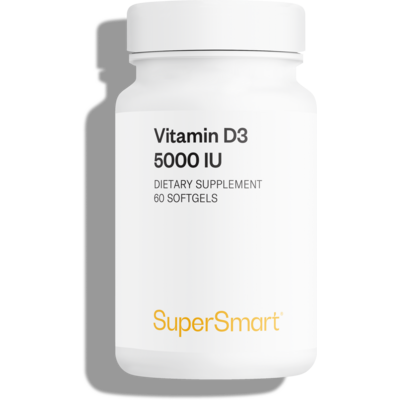
Vitamin D also plays a part in the normal functioning of the immune system. Its receptors are expressed by many immune cells, which explains researchers’ growing interest in its putative role in modulating innate and adaptive immune responses (10). Although it is mainly synthesised in response to sunlight, it is unfortunately found only in a few foods, such as oily fish and egg yolks. Deficiencies therefore remain fairly common.
With its high potency, Vitamin D3 5000 IU rapidly raises circulating vitamin D levels, as confirmed by blood tests.
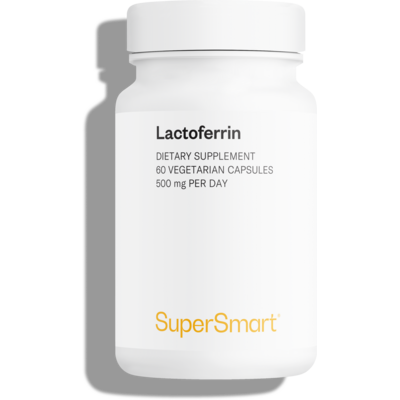
Lactoferrin is a glycoprotein naturally present in breast milk (including colostrum), as well as in tears, saliva and certain immune cells. Initially studied for its ability to bind to iron and thereby limit the growth of certain pathogenic microorganisms, it is now recognised as an important component of innate immunity (11). Research suggests that it may regulate cytokine production, promote the recruitment of immune cells to sites of inflammation and help maintain the balance of the microbiota.
Lactoferrin is based on purified lactoferrin extracted from whey proteins.
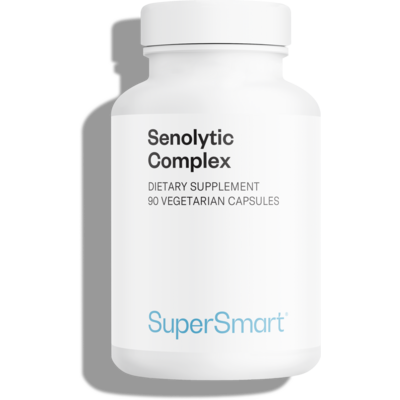
Finally, combinations of so-called senolytic compounds, such as quercetin or fisetin, are in line with research into the elimination of senescent cells and healthy aging (12).
Senolytic Complex brings together the key active ingredients from research into cellular senescence and longevity: fisetin, quercetin, black tea extract, vitamin C, bromelain…
Maintaining a diverse microbiota
The gut microbiota maintains a constant dialogue with the immune system. The billions of microorganisms that make up the microbiota play a part in the development and maturation of certain immune cells, whilst helping to regulate inflammatory responses (13).
Maintaining a healthy and diverse gut flora depends first and foremost on adopting a diet rich in fibre and plant-based foods (fruit, vegetables, pulses, etc.), which promotes the growth and colonisation of beneficial bacteria (14).
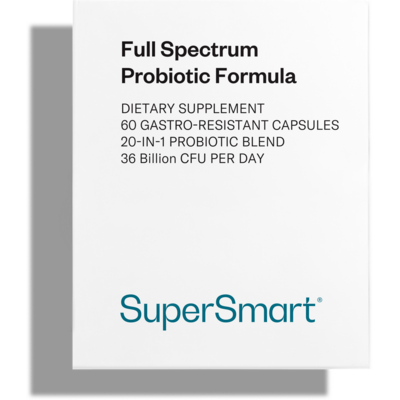
When this balance is disrupted, certain probiotic strains can also provide valuable support as part of a comprehensive strategy aimed at preserving the health of the microbiota (15).
The multi-strain probiotics Probio Forte and Full Spectrum Probiotic are specifically formulated to cover a broad spectrum of microorganisms to encourage this diversification.
SUPERSMART’S ADVICE
References
- Montoya-Ortíz G. Immunosenescence. In: Anaya JM, Shoenfeld Y, Rojas-Villarraga A, et al., editors. Autoimmunity: From Bench to Bedside [Internet]. Bogota (Colombia): El Rosario University Press; 2013 Jul 18. Chapter 11. Available from: https://www.ncbi.nlm.nih.gov/books/NBK459430/
- Goyani P, Christodoulou R, Vassiliou E. Immunosenescence: Aging and Immune System Decline. Vaccines (Basel). 2024 Nov 23;12(12):1314. doi: 10.3390/vaccines12121314. PMID: 39771976; PMCID: PMC11680340.
- Liu Z, Liang Q, Ren Y, Guo C, Ge X, Wang L, Cheng Q, Luo P, Zhang Y, Han X. Immunosenescence: molecular mechanisms and diseases. Signal Transduct Target Ther. 2023 May 13;8(1):200. doi: 10.1038/s41392-023-01451-2. PMID: 37179335; PMCID: PMC10182360.
- Kuerec AH, Lim XK, Khoo AL, Sandalova E, Guan L, Feng L, Maier AB. Targeting aging with urolithin A in humans: A systematic review. Res Rev. 2024 Sep;100:102406. doi: 10.1016/j.arr.2024.102406. Epub 2024 Jul 11. PMID: 39002645.
- Faitg J, D'Amico D, Rinsch C, Singh A. Mitophagy Activation by Urolithin A to Target Muscle Aging. Calcif Tissue Int. 2024 Jan;114(1):53-59. doi: 10.1007/s00223-023-01145-5. Epub 2023 Nov 5. PMID: 37925671; PMCID: PMC10791945.
- Denk, D., Singh, A., Kasler, H.G. et al. Effect of the mitophagy inducer urolithin A on age-related immune decline: a randomized, placebo-controlled trial. Nat Aging 5, 2309–2322 (2025). https://doi.org/10.1038/s43587-025-00996-x
- Wang J, Zhao W, Ding J, Li Y. The effect of physical activity on anti-infection immunity: a review. Health Inf Sci Syst. 2025 Jul 23;13(1):45. doi: 10.1007/s13755-025-00360-8. PMID: 40717906; PMCID: PMC12287504.
- Besedovsky L, Lange T, Haack M. The Sleep-Immune Crosstalk in Health and Disease. Physiol Rev. 2019 Jul 1;99(3):1325-1380. doi: 10.1152/physrev.00010.2018. PMID: 30920354; PMCID: PMC6689741.
- Wessels I, Maywald M, Rink L. Zinc as a Gatekeeper of Immune Function. Nutrients. 2017 Nov 25;9(12):1286. doi: 10.3390/nu9121286. PMID: 29186856; PMCID: PMC5748737.
- Aranow C. Vitamin D and the immune system. J Investig Med. 2011 Aug;59(6):881-6. doi: 10.2310/JIM.0b013e31821b8755. PMID: 21527855; PMCID: PMC3166406.
- Actor JK, Hwang SA, Kruzel ML. Lactoferrin as a natural immune modulator. Curr Pharm Des. 2009;15(17):1956-73. doi: 10.2174/138161209788453202. PMID: 19519436; PMCID: PMC2915836.
- Wang Y, He Y, Rayman MP, Zhang J. Prospective Selective Mechanism of Emerging Senolytic Agents Derived from Flavonoids. J Agric Food Chem. 2021 Oct 27;69(42):12418-12423. doi: 10.1021/acs.jafc.1c04379. Epub 2021 Oct 18. PMID: 34662116.
- Wiertsema SP, van Bergenhenegouwen J, Garssen J, Knippels LMJ. The Interplay between the Gut Microbiome and the Immune System in the Context of Infectious Diseases throughout Life and the Role of Nutrition in Optimizing Treatment Strategies. Nutrients. 2021 Mar 9;13(3):886. doi: 10.3390/nu13030886. PMID: 33803407; PMCID: PMC8001875.
- Fu J, Zheng Y, Gao Y, Xu W. Dietary Fiber Intake and Gut Microbiota in Human Health. Microorganisms. 2022 Dec 18;10(12):2507. doi: 10.3390/microorganisms10122507. PMID: 36557760; PMCID: PMC9787832.
- Mazziotta C, Tognon M, Martini F, Torreggiani E, Rotondo JC. Probiotics Mechanism of Action on Immune Cells and Beneficial Effects on Human Health. Cells. 2023 Jan 2;12(1):184. doi: 10.3390/cells12010184. PMID: 36611977; PMCID: PMC9818925.
Keywords




4 Hours
Easy to order products
Easy to order products
Edward P
3 Days
correct product arrived on time
The product arrived on time and appears to be what I ordered (i do not perform any tests outside of my own experience). I have used this Bacillus Subtills for quite over a year, and I am convinced of it's contribution to my microbiome. The product and business model work well.
Lisa
4 Days
All the supplements are of great…
All the supplements are of great quality and they have almost anything you could need
kirstin Torres
4 Days
Easy to order, fast delivery
Easy to order, fast
Sissy Lawson
8 Days
What luck to come across such a clean…
What luck to come across such a clean brand! No bad ingredients in these and a reasonable price for what we're getting.
Bindi S
9 Days
The best supplement for…
The best supplement for hyperpigmentation or melasma. I have struggled with melasma and hyperpigmentation for 10 years. I have tried everything, including lasers. Nothing really worked except this!
NS
11 Days
Great source for high quality…
Great source for high quality supplements
Vikki L
13 Days
Recommended: "Eye Pressure"
(Eye Pressure pills) Highly recommended for glaucoma patients
LM
15 Days
Great follow-up
Great follow-up
Michael Henderson
18 Days
My hair isn't gray.
My hair isn't gray.
TANQUARY Damon
19 Days
The ease of ordering is not the only …
The ease of ordering is not the only reason why I trust Super Smart Supplements. This company researches everything they sell. Educating Me with a wealth knowledge to make Better Supplement choices. The paractin Andrographis is awesome! I noticed less Knee, shoulder or joint pain. Which proves to me, you're never too old to repair what a lifetime of intense usage has done to your body. I recommend SUPER SMART to anyone who is looking to improve their overall health & maintain an active ,pain free life as You age.
Mchael Montalbano
22 Days
Quick shipping and very good quality
Quick shipping and very good quality. I’ve bought from them for the last six months
Monig
24 Days
love the quality of the supplements!
love the quality of the supplements!
Tatiana
26 Days
Came quickly
Came quickly
Courtney Everson
27 Days
Feels great on my skin
I have only used the SuperSmart NAD face cream for a couple of weeks. So I can’t say it transformed my skin yet. However, it absorbs nicely. Is not oily or caused any acne. It feels wonderful in my routine which means I will consistently use every day! I’ve already researched the ingredients so I’m confident it will help clear the zombie cells and keep my skin looking fresh. I’m pleasantly surprised and will repurchase!
Moto