
Kefir: The Miracle Drink!
Have you heard of kefir? This ancient beverage with its distinctive taste is making a strong comeback among wellness enthusiasts. And for good reason — this elixir has many advantages. Here is why!

What Is Kefir?
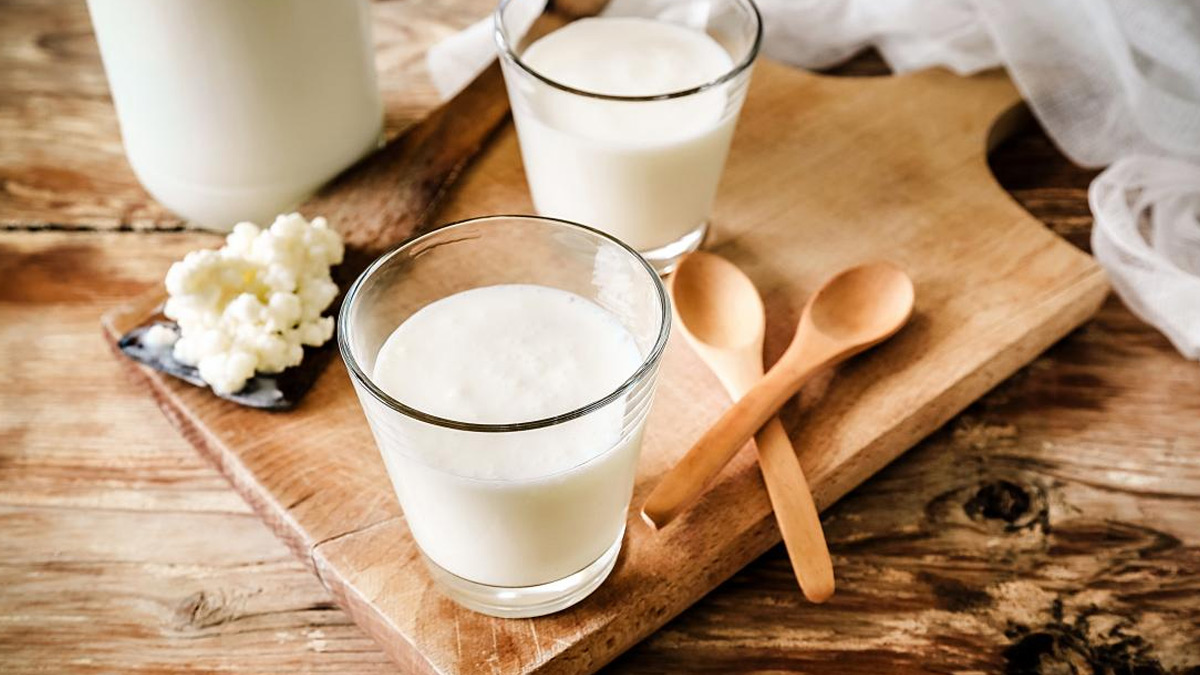
Originally from the Caucasus region, where it has been consumed for thousands of years, kefir is a fermented drink with multiple benefits, highly appreciated in Russia and Eastern Europe. Made from milk or fruit juice (or water with fruit), kefir is a naturally fizzy drink with a very low alcohol content (less than 1%) and a characteristic taste that is slightly tangy and bitter. Traditionally, kefir (made only from milk at the time) was the emblematic drink of nomadic peoples who carried it in animal-skin pouches. It is believed that storing goat’s milk in these natural skins may have initiated the fermentation process.
Are Kefir Grains Essential for Making Kefir?
Without kefir grains, it is impossible to make this unique beverage, because the grains act as a ferment and trigger the chemical reaction that produces kefir. Kefir grains look like clusters of tiny beads that join together, resembling miniature cauliflower florets; they can be white, yellowish, or translucent. Behind their surprising appearance, kefir grains are actually a combination of bacteria, yeasts, and polysaccharides with remarkable properties. Historically, milk kefir grains were simply the whitish film that coated the inside of the animal skins used to carry milk, which was then collected and reused as a ferment. These grains were passed down from generation to generation. Today, kefir grains are available in health food stores or online, most often sold in dehydrated form.
Milk Kefir, Water Kefir — What is the Difference?
Milk kefir is produced by fermenting milk, while water kefir is produced by fermenting fruit (and is sometimes called fruit kefir). Milk kefir grains are different from water kefir grains: the former are white or yellowish, while the latter are smaller and translucent, similar to crystals. Each type of grain has its own composition of yeasts, bacteria, and polysaccharides — but both produce drinks valued for their wellness-supporting properties. It is important, however, to use the appropriate type of grain depending on the beverage you want to make.
What Are the Wellness Benefits of Kefir?
Kefir is often considered as the ultimate health drin!. Élie Metchnikoff, Nobel Prize laureate in 1908, even referred to it as an "elixir of long life." Very rich in probiotics, kefir is widely appreciated for supporting digestive comfort and may help promote healthy intestinal transit. But that is not its only advantage. Like all foods that contain significant levels of probiotics, kefir helps maintain and rebalance the intestinal flora. The benefit? A more resilient digestive system and overall support for the immune response. Kefir may also help improve lactose tolerance, support healthy cholesterol levels, and contribute to maintaining healthy blood pressure. It is sometimes recommended for supporting skin wellness and may even, according to certain studies, help reduce the risk of abnormal cell development. In addition to its richness in probiotics, kefir also provides vitamins and, in the case of milk kefir, proteins.
How to Make Homemade Kefir?
It is very easy, and you will find plenty of recipes and tutorials online (many blogs explain the process step by step) to prepare your own milk kefir or water kefir at home. In summary, the first step is to rehydrate the kefir grains (if they are dehydrated), then place them in milk (cow’s milk or another type) or in a mixture of water, fruit (citrus fruit and figs work well), and sugar. The mixture must ferment at room temperature for several hours before being strained (always with a plastic strainer). It is important to follow each step carefully, as kefir is a living and therefore delicate culture. Do not discard the kefir grains when your drink is ready — they can be reused. Simply store them in the refrigerator, covered in liquid, in a container kept away from other fermented products. To make the most of this unique beverage, try to drink it regularly and alternate between milk kefir and water kefir. Homemade kefir can be stored in the refrigerator for 3 to 5 days.
Keywords



8 Hours
Great source for high quality…
Great source for high quality supplements
Vikki L
2 Days
Recommended: "Eye Pressure"
(Eye Pressure pills) Highly recommended for glaucoma patients
LM
3 Days
Great follow-up
Great follow-up
Michael Henderson
7 Days
My hair isn't gray.
My hair isn't gray.
TANQUARY Damon
8 Days
The ease of ordering is not the only …
The ease of ordering is not the only reason why I trust Super Smart Supplements. This company researches everything they sell. Educating Me with a wealth knowledge to make Better Supplement choices. The paractin Andrographis is awesome! I noticed less Knee, shoulder or joint pain. Which proves to me, you're never too old to repair what a lifetime of intense usage has done to your body. I recommend SUPER SMART to anyone who is looking to improve their overall health & maintain an active ,pain free life as You age.
Mchael Montalbano
10 Days
Quick shipping and very good quality
Quick shipping and very good quality. I’ve bought from them for the last six months
Monig
13 Days
love the quality of the supplements!
love the quality of the supplements!
Tatiana
15 Days
Came quickly
Came quickly
Courtney Everson
16 Days
Feels great on my skin
I have only used the SuperSmart NAD face cream for a couple of weeks. So I can’t say it transformed my skin yet. However, it absorbs nicely. Is not oily or caused any acne. It feels wonderful in my routine which means I will consistently use every day! I’ve already researched the ingredients so I’m confident it will help clear the zombie cells and keep my skin looking fresh. I’m pleasantly surprised and will repurchase!
Moto
18 Days
Excellent quality
Excellent quality, I can usually tell the difference when I get other cheaper brands that are not as good. Supersmart is my first choice
MMA TUBE
22 Days
Like the product
Like the product. The bottle design is too bland.
JENKINS Rose
28 Days
Super easy and great communication
Super easy and great communication
Greg Maurer
31 Days
Cured my blood sugar issues with correct diet and almost no sugar.
Ordering was very easy and it was here within a day or two. But the best thing of all is that it fixed my blood sugar problems. I was sweating throughout the night. I had almost completely stopped sugar , which definitely helped, but I was still having sweats and this product here solved that problem. It took me years to figure it this out. I hope this helps somebody.
Rickey Matlock
35 Days
I was impressed by the patience of the representative who helped me!
I was having a very hard time trying to set up my account with them and they were very helpful and patient to get it done for me! And I was impressed by all the information they provided about the product I was purchasing!
Rebecca M.
36 Days
Super Smart Choices
I have been a customer for a few years.I have learned many things about the supplements Super smart sells. It helps me make better choices from their vast inventory of supplements. The prices are reasonable, with frequent sales. Also, website is user friendly & I receive my products in just a few days. Great company !!!
Mchael Montalbano