
Low-residue diet: summary table of foods
Need to follow a low-residue diet – either prior to surgery, or to relieve your digestive problems? Here’s a list of permitted and prohibited foods.


Low-residue diet : what exactly is it?
A low-residue diet is one designed to reduce the amount of food material (residues) that remains in the digestive tract (1). This includes substances which are not fully absorbed by the small intestine – such as plant fibre – and which end up in the colon. In its strictest version, it also bans foods likely to irritate the intestinal mucosa or accelerate intestinal transit.
Low-residue diet: before a colonoscopy, but not exclusively
Excluding many foods, a low-residue diet is designed to put minimum strain on the intestines.
In fact, it is routinely prescribed by gastroenterologists 3 days before an exploratory colonoscopy, as well as in preparation for a lower digestive tract operation (colon, rectum, anus) (2). It is also indicated post-intervention to protect the areas operated on, with soft, semi-liquid or liquid foods.
It can also relieve the acute inflammatory flare-ups associated with certain digestive disorders (Crohn’s disease, ulcerative colitis, diverticulitis) (3).
The two main types of low-residue diet
Strict low-residue diet
A strict low-residue diet is one that puts the least strain on the digestive mucosa, and is therefore the most restrictive.
The foods prohibited are:
- sources of plant fibre which are not broken down by digestive enzymes and are particularly fermentable. This automatically excludes all forms of fruit and vegetables (fresh, juice, compotes …), wholegrain or semi-wholegrain cereals, pulses (lentils, chickpeas …), as well as seeds and oilseeds (4) ;
- resistant starches, not easily broken down by amylases, which are mainly found in chilled or frozen starchy foods (pasta salads, tabbouleh …) ;
- lactose, the ‘milk’ sugar also found in yogurt and fromage blanc, which can cause diarrhea in those with lactase deficiency (5) ;
- fermented cheeses, likely to cause bloating and flatulence: Camembert, Roquefort, Munster… ;
- polyols (xylitol, maltitol, sorbitol…) used as sugar substitutes, which cause excessive fermentation in the colon (6) ;
- fatty meats, cooked fats, spices, alcohol and caffeine in excess, which tend to attack the digestive mucosa (7-8).
Expanded low-residue diet
The expanded or less strict low-residue diet is similar to a low-fibre diet . More flexible, it only excludes fruits, vegetables, whole grains, pulses and seeds. It can take over from a strict low-residue diet when you want to gradually reintroduce food categories without ‘rushing’ your digestion.
Strict low-residue diet: detailed table of permitted and prohibited foods
Important: this list of foods may vary depending on the patient, practitioner and disorder. If in doubt, refer to the dietary recommendations provided by your doctor.
|
Category |
Permitted foods |
Prohibited foods |
|
Fruits and vegetables |
None |
All, whether fresh, juiced, in compotes or canned |
|
Starches and pulses |
White toasted bread, white crispbread. Corn flakes White flour, cornstarch Refined starches (regular pasta, white rice …) consumed just after cooking |
Fresh bread, speciality breads (wholemeal, seeded…), wholemeal crispbreads Muesli, oatmeal Wholegrain or semi-wholegrain starches, pseudocereals (quinoa, buckwheat ...), wholemeal or brown flour Potatoes (especially crisps, chips and mashed potatoes) All pulses |
|
Animal and plant protein |
Lean meats (filet mignon, veal escalope, 5% fat minced beef …) and skinless chicken breasts cooked without fat All fresh fish and seafood cooked without fat, fish canned in brine (canned tuna …) White ham, fat and rind removed Hard-boiled or poached egg |
Fatty, raw or smoked meats Charcuterie (excluding cooked ham) Fish canned in oil, smoked or breaded fish, raw seafood Fried egg or omelette Tofu, tempeh, seitan and derivatives |
|
Dairy products |
Lactose-free milk (in moderation), pressed or cooked cheeses (Emmental, Comté, Gouda, Parmesan…) |
Yogurts, fromage blanc, petits-suisses, dairy desserts, fromage frais, veined cheeses or cheeses with rind, cheese with more than 45% fat. Plant-based drinks and desserts (oat, soya, coconut …) |
|
Fats |
Butter, margarine and oils in raw form only |
Cooked fats, crème fraîche, mayonnaise, ketchup, fatty sauces (béarnaise, hollandaise…) |
|
Confectionery and sweet products |
Sugar, honey, fruit jellies, fruit pastes, dry biscuits (petits-beurre, sponge fingers) |
Jams, chocolate and derivatives, almond paste, nougat, sorbets, ice creams, fruit and/or cream patisserie, pastries, sweeteners |
|
Beverages and soups |
Still waters, weak teas and coffees, non-laxative infusions |
Sparkling waters, fruit juices, wines, alcoholic drinks |
|
Condiments |
Salt
|
Spices, mustard, vinegar, aromatic herbs, capers, cornichons |
Low-residue diet: what to eat for breakfast?
Here are 3 examples of breakfasts compatible with a strict low-residue diet :
- 3 crispbreads + butter + gooseberry jelly + 1 cup of coffee
- 1 slice of toasted baguette + 1 portion of Comté + 1 cup of rooibos tea
- 1 bowl of cornflakes + lactose-free milk + 1 cup of tea
Low-residue diet: example of a full day’s menu
Breakfast:
- toast + margarine + honey
- 1 white coffee with lactose-free milk
Lunch:
- 1 grilled turkey escalope + semolina
- 1 piece of Gruyère + white toast
- 1 fruit jelly
Tea (optional) :
- 3 petits-beurre biscuits
- 1 cup of weak tea or coffee
Dinner :
- vegetable broth with vermicelli
- 2 hard-boiled eggs
- 1 piece of Edam + crispbreads
Low-residue diet: potential fatigue
As the low-residue diet excludes a number of nutrients, it should not be followed for a long time. In actual fact, it is rarely continued for more than 3 or 4 days.
Any longer and it can lead to significant fatigue, constipation and vitamin and mineral deficiencies(9). It should also not undertaken without medical advice.
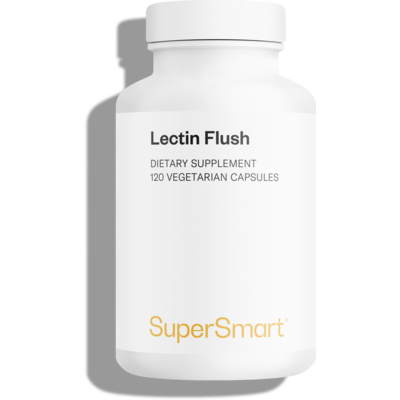
If you suffer from chronic digestive sensitivities, it’s worth knowing that there are supplements that specifically target these problems (such as Lectin Flush which contains chelators of lectins - proteins ubiquitous in our diet which are potentially involved in various inflammatory reactions).
SuperSmart ADVICE
References
- Sorathia AZ, Sorathia SJ. Low Residue Diet. [Updated 2023 Apr 24]. In: StatPearls [Internet]. Treasure Island (FL): StatPearls Publishing; 2023 Jan-. Available from: https://www.ncbi.nlm.nih.gov/books/NBK557693/
- Vanhauwaert E, Matthys C, Verdonck L, De Preter V. Low-residue and low-fiber diets in gastrointestinal disease management. Adv Nutr. 2015 Nov 13;6(6):820-7. doi: 10.3945/an.115.009688. PMID: 26567203; PMCID: PMC4642427.
- Brown AC, Rampertab SD, Mullin GE. Existing dietary guidelines for Crohn's disease and ulcerative colitis. Expert Rev Gastroenterol Hepatol. 2011 Jun;5(3):411-25. doi: 10.1586/egh.11.29. PMID: 21651358.
- Sorathia AZ, Sorathia SJ. Low Residue Diet. 2023 Apr 24. In: StatPearls [Internet]. Treasure Island (FL): StatPearls Publishing; 2023 Jan–. PMID: 32491625.
- Asfari MM, Sarmini MT, Kendrick K, Hudgi A, Uy P, Sridhar S, Sifuentes H. Association between Inflammatory Bowel Disease and Lactose Intolerance: Fact or Fiction. Korean J Gastroenterol. 2020 Oct 25;76(4):185-190. doi: 10.4166/kjg.2020.76.4.185. PMID: 33100313.
- Lenhart A, Chey WD. A Systematic Review of the Effects of Polyols on Gastrointestinal Health and Irritable Bowel Syndrome. Adv Nutr. 2017 Jul 14;8(4):587-596. doi: 10.3945/an.117.015560. PMID: 28710145; PMCID: PMC5508768.
- Bishehsari F, Magno E, Swanson G, Desai V, Voigt RM, Forsyth CB, Keshavarzian A. Alcohol and Gut-Derived Inflammation. Alcohol Res. 2017;38(2):163-171. PMID: 28988571; PMCID: PMC5513683.
- Esmaillzadeh A, Keshteli AH, Hajishafiee M, Feizi A, Feinle-Bisset C, Adibi P. Consumption of spicy foods and the prevalence of irritable bowel syndrome. World J Gastroenterol. 2013 Oct 14;19(38):6465-71. doi: 10.3748/wjg.v19.i38.6465. PMID: 24151366; PMCID: PMC3801318.
- Yang J, Wang HP, Zhou L, Xu CF. Effect of dietary fiber on constipation: a meta analysis. World J Gastroenterol. 2012 Dec 28;18(48):7378-83. doi: 10.3748/wjg.v18.i48.7378. PMID: 23326148; PMCID: PMC3544045.
Keywords


1 Days
Always follow through with!
Always follow through with!
DOMINIC
2 Days
Good product's good service
Good product's good service
PERCY
3 Days
Excellent
Excellent, thank you!
WRIGHT Connie
3 Days
I appreciate the ease in ordering the…
I appreciate the ease in ordering the supplements I need from SuperSmart. This is my 3rd order. And I really like it when I’m informed of any specials being offered. Thank you!
Vikki L
8 Days
My Nutritionist
My Nutritionist Dr. Jill MacDougal steer me to these Super Smart vitamins and minerals and I love them! Dr. Jill has Died of Colon Cancer and I will miss her Dearly! Steve
Steve, Flushing, MI
19 Days
We ordered the SuperSmart for nerve…
We ordered the SuperSmart nerve supplement and it actually works as it offers relief for foot pain. Very happy that we decided to give it a try.
Suzanne Poyer
22 Days
very good products
very good products. always receive items in timely manner. enjoy doing business with superSmart.
HOGANSON Mark
32 Days
First bottle has been finished
First bottle has been finished. 2 bottles remaining for 3 month time frame trial as recommended
CORCORAN Pamela
37 Days
repeat customer
recommended by my doctor. easy to create an account. Discounts and specials are appreciated. packaging and delivery is dependable. Capsules easy to digest. I've had some some capsules and tablets that are broken inside their bottles.
Kokee
41 Days
Order was shipped on time and packaged…Wonderful Jobs!
Order was shipped on time and packaged excellently.
DMHoge
48 Days
great products and prices
great products and prices
Marie
54 Days
Easy to navigate site
Easy to navigate site, had what I was searching for, good price. easy order-check out
James Tucker
60 Days
My skin is clearing up nicely!
Pretty good for my skin so far.
Christian
62 Days
The new packaging is excellent
The new packaging is excellent - finally! No more squashed boxes and torn envelopes.
GORAN
63 Days
Great Product
Great Product
Larry Garrett