
Glycemic load: summary table
Keen to follow a low-glycemic load diet? This table lists both the glycemic index and glycemic load of common foods in alphabetical order

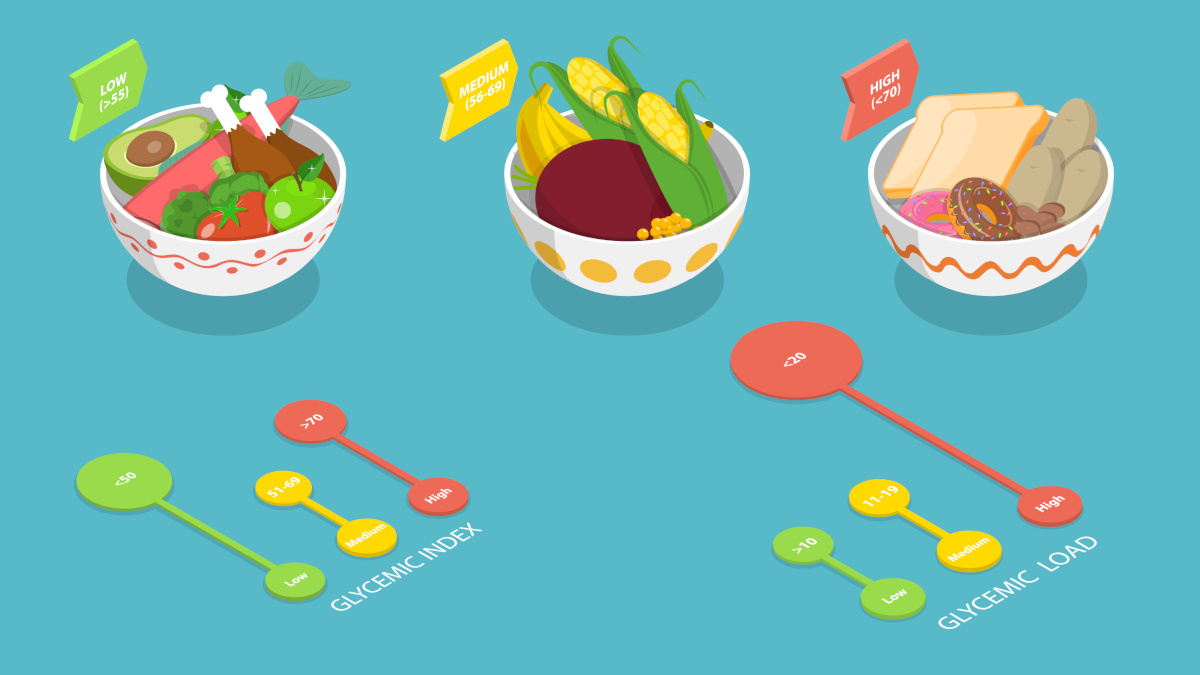
Glycemic index and glycemic load
The glycemic index (GI) is a measure developed by doctors in the 1980s to evaluate the effect of foods on blood sugar levels, as part of efforts to combat diabetes. Basically, the more a food makes blood sugar levels rise, the higher its glycemic index (1).
This device allowed doctors to understand that not all carbohydrates are necessarily bad for diabetics: some carbohydrates (such as glucose and sucrose) are worse than others (such as fructose and starch).
With this knowledge, they were able to categorize foods according to their GI:
- below 55, a food is classed as low GI ;
- between 55 and 69, it is moderate GI;
- above 70, it is high GI.
However, there are two factors not taken into account by the glycemic index:
- the amount of carbohydrates a food contains;
- the the serving size normally consumed of that food.
Because of this, we now have the glycemic load: a new measure which allows a more precise evaluation of a food’s impact on blood sugar(2).
Glycemic load formula
To determine a food’s glycemic load, you multiply its glycemic index by the number of carbohydrates in an average serving of the food, then divide that by 100.
Let’s take the example of cornflakes:
- they have a GI of 80 ;
- a normal 30g serving contains around 25g of carbohydrates, so their glycemic load will be (25 x 80)/100 = 20.
What’s an appropriate daily glycemic load?
It is generally accepted that the daily glycemic load should be somewhere between 80 and 120. Anything above that is considered too high.
To arrive at this figure, you simply add together the glycemic load of all the different foods consumed during the day (using the amount actually consumed rather than that ‘normally’ consumed).
Glycemic index and glycemic load table
To help you, we’ve put together this table of the glycemic load and index of 50 common foods. As you’ll see, it’s the freshest, least refined and least processed foods which have the lowest glycemic load (3).
|
Food |
Carbohydrates per serving |
Glycemic index |
Glycemic load |
|
1. Apricots |
11 |
34 |
3.8 |
|
2. Apricots (dried) |
60 |
30 |
18 |
|
3. Bananas |
21 |
48 |
10 |
|
4. Wheat (cooked) |
90 |
35 |
32 |
|
5. Bulghur wheat |
76 |
55 |
42 |
|
6. Carrots (raw) |
20 |
23 |
2 |
|
7. Carrots (cooked) |
20 |
92 |
9 |
|
8. Cherries |
16 |
25 |
4 |
|
9. Chocolate (dark) |
30 |
23 |
7 |
|
10. Dates |
15 |
29 |
4 |
|
11. Dates (dried) |
35 |
40 |
14 |
|
12. Wholemeal flour T150 (wholemeal loaf) |
15 |
51 |
8 |
|
13. Wholemeal flour T55 (baguette) |
18 |
83 |
12 |
|
14. Wholemeal flour T65 (farmhouse loaf) |
15 |
85 |
13 |
|
15. Strawberries |
7.7 |
25 |
1.9 |
|
16. Gnocchi |
20 |
70 |
14 |
|
17. White beans (cooked) |
64 |
35 |
22.5 |
|
18. Kidney beans (cooked) |
53 |
35 |
18.5 |
|
19. French beans |
21.5 |
80 |
17.2 |
|
20. Kiwi fruit |
15 |
50 |
7.5 |
|
21. Lentils (cooked) |
50 |
25 |
12.5 |
|
22. Lychees |
15 |
50 |
7.6 |
|
23. Mangos |
15 |
56 |
8.5 |
|
24. Honey |
5 |
53 |
3 |
|
25. Muesli (plain) |
47 |
50 |
23.5 |
|
26. Nectarines |
12 |
35 |
4 |
|
27. Nuts |
7 |
15 |
1 |
|
28. Oranges |
12 |
35 |
4 |
|
29. Orange juice |
15 |
45 |
8 |
|
30. Grapefruit |
11 |
22 |
2.5 |
|
31. Watermelon |
7.5 |
75 |
5.5 |
|
32. Sweet potato (cooked) |
28 |
65 |
18.2 |
|
33. White pasta (cooked) |
40 |
60 |
25 |
|
34. Wholemeal pasta (cooked) |
40 |
50 |
20 |
|
35. Peaches |
11 |
35 |
4 |
|
36. Peas (cooked) |
15 |
9 |
1 |
|
37. Pears |
15.5 |
30 |
4.5 |
|
38. Split peas (cooked) |
22 |
22 |
5 |
|
39. Apples |
14 |
36 |
5 |
|
40. Apple juice |
11 |
41 |
4.5 |
|
41. Potato (cooked) |
21 |
95 |
20 |
|
42. Squash (cooked) |
7 |
65 |
4.5 |
|
43. Plums |
11 |
35 |
9 |
|
44. Quinoa (cooked) |
21 |
35 |
7.5 |
|
45. White grapes |
17 |
56 |
9.6 |
|
46. White rice |
80 |
70 |
56 |
|
47. Wholegrain rice |
80 |
50 |
28 |
|
48. Buckwheat |
44 |
50 |
22 |
|
49. Semolina |
70 |
60 |
42 |
|
50. Tomato juice |
4.2 |
35 |
1.5 |
Controlling your blood sugar
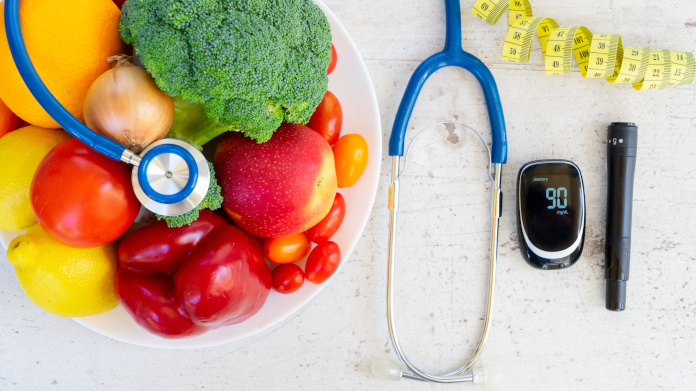
If you want to control your weight or indeed lose weight, it’s essential to monitor your blood sugar levels: the metabolism of glucose is a factor in weight gain, and especially fat mass gain.
This is because foods with a high glycemic load produce a spike in insulin, and insulin allows glucose to enter cells. Any excess glucose generated is then metabolized into fat cells called adipocytes.
The good news is there are several plants and natural remedies that can help to normalize the metabolism of sugars and thus regulate glycemia. The main ones are:
- banaba, a tropical shrub containing corosolic acid, a pentacyclic triterpene which transports glucose across the cell membrane (4-5) ;
- barberry, a semi-tropical shrub containing berberine, an alkaloid which promotes glucose metabolism and helps maintain normal glycemia (6);
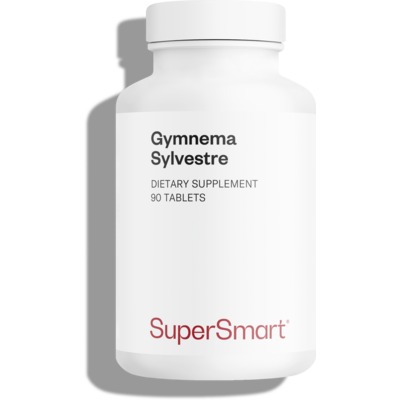
- Gymnema sylvestris, an Ayurvedic plant containing gymnemic acid, which is believed to delay the absorption of glucose into the blood, thus helping to normalize sugar metabolism (7-8).
SuperSmart ADVICE


References
- WOLEVER, T. M. The glycemic index. World review of nutrition and dietetics, 1990, vol. 62, p. 120-185.
- VENN, B. J. et GREEN, T. J. Glycemic index and glycemic load: measurement issues and their effect on diet–disease relationships. European journal of clinical nutrition, 2007, vol. 61, no 1, p. S122-S131.
- FOSTER-POWELL, Kaye, HOLT, Susanna HA, et BRAND-MILLER, Janette C. International table of glycemic index and glycemic load values: 2002. The American journal of clinical nutrition, 2002, vol. 76, no 1, p. 5-56.
- STOHS, Sidney J., MILLER, Howard, et KAATS, Gilbert R. A review of the efficacy and safety of banaba (Lagerstroemia speciosa L.) and corosolic acid. Phytotherapy Research, 2012, vol. 26, no 3, p. 317-324.
- STOHS, Sidney J., MILLER, Howard, et KAATS, Gilbert R. A review of the efficacy and safety of banaba (Lagerstroemia speciosa L.) and corosolic acid. Phytotherapy Research, 2012, vol. 26, no 3, p. 317-324.
- LI, Cheng, HE, Jin-Zhi, ZHOU, Xue-Dong, et al.Berberine regulates type 2 diabetes mellitus related with insulin resistance. Zhongguo Zhong yao za zhi= Zhongguo zhongyao zazhi= China journal of Chinese materia medica, 2017, vol. 42, no 12, p. 2254-2260.
- SHANMUGASUNDARAM, E. R. B., RAJESWARI, G., BASKARAN, K., et al.Use of Gymnema sylvestre leaf extract in the control of blood glucose in insulin-dependent diabetes mellitus. Journal of ethnopharmacology, 1990, vol. 30, no 3, p. 281-294.
- SANEJA, Ankit, SHARMA, Chetan, ANEJA, K. R., et al.Gymnema sylvestre (Gurmar): A review. Der Pharmacia Lettre, 2010, vol. 2, no 1, p. 275-284.



7 Days
Diversity, Delivery, Quality
The product quality, delivery, pricing and diversity of product makes me a satisfied (contented) customer.
JENKINS Rose
7 Days
Good quality
I've ordered supplements from this company three times now. I feel a difference for sure when I take the supplements, their shipping is fast and their quality is good. I'm glad I found them
Monica G
11 Days
Good products
Good products , fast delivery
Jacqueline
12 Days
fast and quick customer service…
fast and quick customer service products are shipped immediately
Michele Dunn
20 Days
Reliable in all ways as a company and…
Reliable in all ways as a company and products available.
DOMINIC
24 Days
Love Supersmart's products!
Their products work!
Diane
25 Days
Excellent experience, as always.
Very fast delivery. Very high quality products Very well made website: easy to navigate, easy to understand and very good and thorough description of each product. Thumbs up!
BUISSON Laurence
34 Days
Dania is Funia
The experience was great because the representative was so personal with me. She was knowledgeable and friendly. I like that she didn't act like a robot and truly was a quality voice behind a quality company. I will continue to purchase from Supersmart!!
Eric Ostovani
38 Days
no time to do your market research
no time to do your market research
David Schwartz
39 Days
Always follow through with!
Always follow through with!
DOMINIC
40 Days
Good product's good service
Good product's good service
PERCY
41 Days
Excellent
Excellent, thank you!
WRIGHT Connie
42 Days
I appreciate the ease in ordering the…
I appreciate the ease in ordering the supplements I need from SuperSmart. This is my 3rd order. And I really like it when I’m informed of any specials being offered. Thank you!
Vikki L
46 Days
My Nutritionist
My Nutritionist Dr. Jill MacDougal steer me to these Super Smart vitamins and minerals and I love them! Dr. Jill has Died of Colon Cancer and I will miss her Dearly! Steve
Steve, Flushing, MI
57 Days
We ordered the SuperSmart for nerve…
We ordered the SuperSmart nerve supplement and it actually works as it offers relief for foot pain. Very happy that we decided to give it a try.
Suzanne Poyer