
Study reveals ergothioneine’s unexpected potential for the brain
Found in certain mushrooms, ergothioneine is a compound with antioxidant potential that has caught the attention of researchers studying brain aging. A recent clinical study has explored its effects on memory and sleep.
- ✓Ergothioneine is an antioxidant compound found mainly in certain mushrooms and, in smaller quantities, in other foods.
- ✓The body does not produce it, but the OCTN1/SLC22A4 transporter enables it to be taken up and accumulated in several tissues, including the brain.
- ✓Researchers are investigating its potential effects on oxidative stress, mitochondria and brain aging.
- ✓A study involving adults aged 55 to 79 reported encouraging results regarding prospective memory and the ability to fall asleep, though these findings have yet to be confirmed.
- ✓A balanced diet, sleep, physical activity and mental stimulation remain the key factors in preserving cognitive function.


Ergothioneine, an antioxidant that the body knows how to target
Ergothioneine is a sulfur-containing amino acid derivative found naturally in food.
The human body cannot produce it itself: it must therefore obtain it from food. It is found mainly in certain mushrooms, but also, in varying quantities, in cereals, pulses, nuts and certain animal-based products.
Its distinctive feature lies in the way it is transported. The body possesses a specific transporter, known as OCTN1/SLC22A4, which is capable of actively capturing ergothioneine and retaining it in various tissues.
The molecule can thus accumulate, in particular, in the brain – an organ that consumes a great deal of energy and is particularly sensitive to oxidative stress. This targeted accumulation distinguishes ergothioneine from many other dietary antioxidants.
It also explains why researchers are studying its interactions with mitochondria – the cells’ powerhouses – as well as its potential role in brain aging and cognitive function.
This is precisely the avenue that a recent clinical study has sought to explore…
A clinical study explores the effects of ergothioneine on memory and sleep
The brain, which consumes a great deal of energy, relies heavily on the proper functioning of mitochondria. As we age, it also becomes more susceptible to oxidative stress.
These two factors are likely to gradually impair cognitive function.
Because ergothioneine can reach the brain and accumulate there, researchers wanted to determine whether supplementation could produce measurable effects in people beginning to experience memory difficulties.
Published in 2025, this study (1) involved 147 adults aged between 55 and 79 who were experiencing forgetfulness or memory difficulties (without any diagnosed cognitive impairment).
As part of this trial, they were given a placebo, 10 mg or 25 mg of ergothioneine per day for 16 weeks. Their memory, cognitive function, sleep and several biomarkers were then assessed.
The most interesting finding concerned subjective prospective memory, i.e. the ability to remember a planned action, such as making an appointment or passing on a message.
After 16 weeks, this ability was better maintained with 25 mg of ergothioneine than with the placebo among participants who had adhered correctly to the protocol.
An improvement in the ease of falling asleep was also observed at this dose.
These initial results point to an interesting avenue, although longer trials will be needed to confirm them.
 Discover L-Ergothioneine, a supplement providing 5 mg of L-ergothioneine MitoPrime™ per capsule.
What other ways are there to maintain cognitive function as we age?
Cognitive health relies above all on several complementary habits. Diet, sleep, physical activity and intellectual stimulation work together to maintain brain health over the years.
Nourishing your brain with the right nutrients
To function properly, the brain needs fatty acids and micronutrients.
Among the most widely studied compounds are omega-3s, particularly DHA, a major component of neuron membranes. It plays a key role in maintaining normal brain function.
Oily fish, such as sardines, mackerel and salmon, are the main sources of DHA. Certain microalgae also provide DHA.
When dietary intake is insufficient, a supplement can provide a precisely measured dose.
Discover Super DHA, a marine-based formula providing DHA and EPA.
Dietary antioxidants also have a role to play in a diet that supports brain health.
Colorful fruit and vegetables are particularly rich in polyphenols and vitamin C, whilst vegetable oils, almonds, hazelnuts and seeds are good sources of vitamin E. Vitamin E helps to protect cells against oxidative stress.
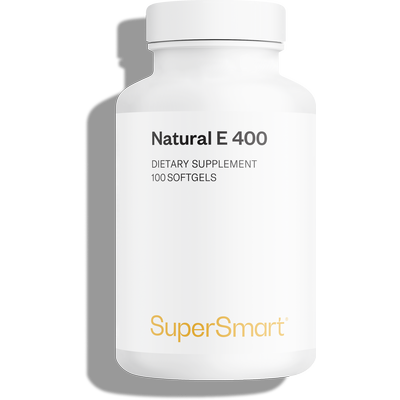
Discover Natural E 400, which provides 400 IU of natural vitamin E in the form of d-alpha-tocopherol.
Finally, some formulations combine several compounds that have been studied in the field of brain nutrition.
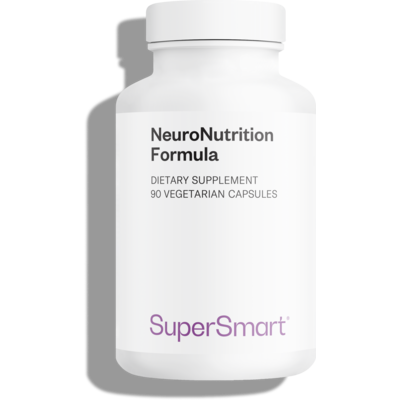
Discover NeuroNutrition Formula, a dietary supplement that combines, amongst other ingredients, alpha-GPC, uridine monophosphate, N-acetyl-L-carnitine and an extract of Gastrodia elata.
As with all dietary supplements, these formulas are not a substitute for a varied and balanced diet.
Supporting memory and concentration
Phosphatidylserine is a phospholipid naturally present in cell membranes, and is particularly concentrated in those of nerve cells.
It contributes to their structure and fluidity, two properties that are important for communication between neurons.
It is therefore the subject of extensive research into memory, attention and cognitive aging (2).
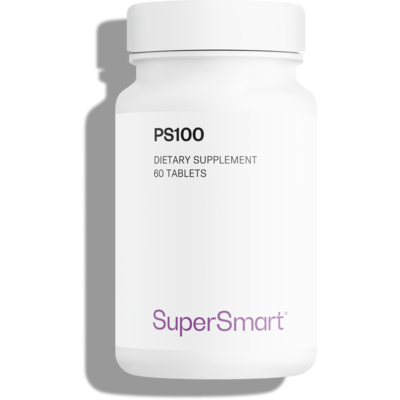
Discover PS 100, which provides 100 mg of phosphatidylserine per tablet.
Ginkgo biloba is another widely studied area (3). Extracts from its leaves contain, in particular, flavonoglycosides and terpenic lactones, two families of compounds being investigated for their interactions with oxidative stress and microcirculation.
Ginkgo biloba helps maintain healthy cognitive function and memory. It also supports normal blood circulation, which is linked to brain performance and responsiveness.
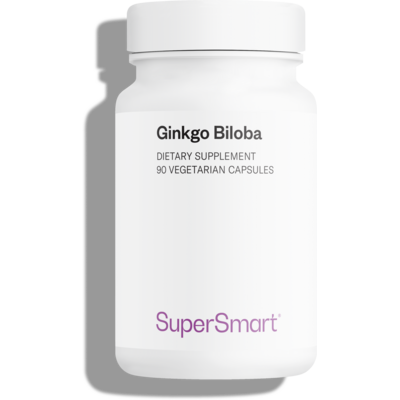
Discover Ginkgo Biloba, a standardized extract containing 24% ginkgoflavonglycosides and 6% terpene lactones.
As ginkgo may interact with certain medicines, it is recommended that you seek advice from a healthcare professional before taking any supplements.
Looking after your sleep
During sleep, the brain consolidates what we have learnt and certain memories. Conversely, regularly disrupted nights’ sleep can affect attention, concentration and memory.
The priority, therefore, is to maintain a regular sleep schedule, get plenty of natural light during the day and, in the evening, limit screen time, stimulants, alcohol and heavy meals.
In addition to these habits, certain active ingredients are being studied for their potential to aid sleep, such as valerian or hops.
Tryptophan, meanwhile, is a precursor to serotonin and, indirectly, to melatonin, which helps reduce the time it takes to fall asleep.
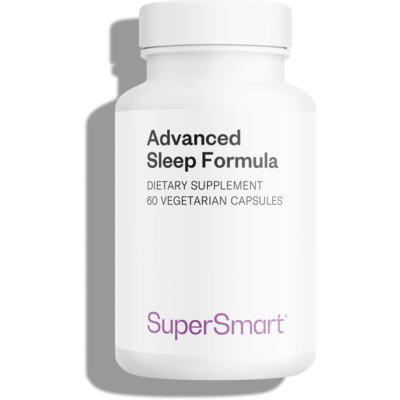
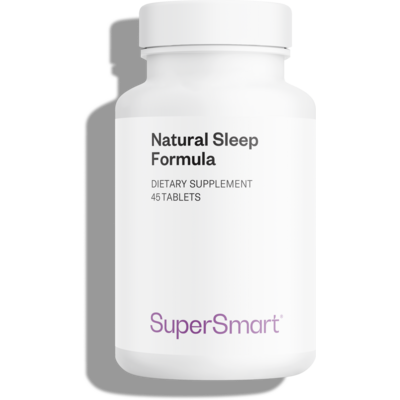
Discover Natural Sleep Formula, which combines valerian, hops, California poppy and tryptophan, and Advanced Sleep Formula, a formula that combines melatonin, vitamin B6 and several plant extracts.
For those who prefer a chewable format, there are also formulas combining melatonin with plants traditionally associated with relaxation.
Discover Sleep Gummies, sugar-free gummies combining melatonin, valerian and passionflower extracts, vitamin B12 and CBD.
In the event of persistent sleep problems, it is still advisable to seek medical advice to identify the cause.
Take regular exercise
Exercise also affects the brain. It temporarily increases cerebral blood flow and, when practised regularly, helps the blood vessels that supply oxygen and glucose to the neurons to adapt.
Physical activity is also associated with an increase in BDNF, a protein involved in the formation and reorganisation of neural connections (4).
It can also support mitochondrial function, insulin sensitivity and the regulation of inflammation.
Brisk walking, cycling, swimming or dancing: the key is consistency, as these biological adaptations develop over the course of repeated sessions (5).
Stimulating your brain on a daily basis
The brain retains its ability to adapt throughout life.
Learning a language, reading, writing, playing a musical instrument or taking up a new activity engages neuroplasticity – that is, the brain’s ability to change in response to experience.
New and sufficiently challenging activities engage attention, reasoning and working memory more than tasks that have become automatic.
They thus contribute to cognitive reserve, which helps the brain adapt to the effects of aging.
Social interactions also play an important role. A conversation simultaneously engages language, memory, attention, the ability to adapt to others’ reactions and emotional regulation.
Reading, learning and social life thus nurture different but complementary aspects of cognition (6).
SUPERSMART ADVICE
References
- Zajac, I.T.; Kakoschke, N.; Kuhn-Sherlock, B.; May-Zhang, L.S. The Effect of Ergothioneine Supplementation on Cognitive Function, Memory, and Sleep in Older Adults with Subjective Memory Complaints: A Randomized Placebo-Controlled Trial. Nutraceuticals 2025, 5, 15.https://doi.org/10.3390/nutraceuticals5030015
- Hersant H, He S, Maliha P, Grossberg G. Over the Counter Supplements for Memory: A Review of Available Evidence. CNS Drugs. 2023 Sep;37(9):797-817. doi: 10.1007/s40263-023-01031-6. Epub 2023 Aug 21. PMID: 37603263.
- Cave AE, Chang DH, Münch GW, Steiner-Lim GZ. A systematic review of the safety and efficacy on cognitive function of herbal and nutritional medicines in older adults with and without subjective cognitive impairment. Systematic Reviews. 2023;12:143.
- Tutakhail A, Diarra F, Coudoré F, Mendez-David I, David DJ. Harnessing exercise for brain health: BDNF, neuroplasticity & well-being. Encephale. 2026 Apr;52(2):187-196. doi: 10.1016/j.encep.2025.08.006. Epub 2025 Nov 7. PMID: 41206250.
- Vecchio LM, Meng Y, Xhima K, Lipsman N, Hamani C, Aubert I. The Neuroprotective Effects of Exercise: Maintaining a Healthy Brain Throughout Aging. Brain Plast. 2018 Dec 12;4(1):17-52. doi: 10.3233/BPL-180069. PMID: 30564545; PMCID: PMC6296262.
- Park DC, Bischof GN. The aging mind: neuroplasticity in response to cognitive training. Dialogues Clin Neurosci. 2013 Mar;15(1):109-19. doi: 10.31887/DCNS.2013.15.1/dpark. PMID: 23576894; PMCID: PMC3622463.
Keywords




1 Days
Easy to order products
Easy to order products
Edward P
4 Days
correct product arrived on time
The product arrived on time and appears to be what I ordered (i do not perform any tests outside of my own experience). I have used this Bacillus Subtills for quite over a year, and I am convinced of it's contribution to my microbiome. The product and business model work well.
Lisa
5 Days
All the supplements are of great…
All the supplements are of great quality and they have almost anything you could need
kirstin Torres
5 Days
Easy to order, fast delivery
Easy to order, fast
Sissy Lawson
9 Days
What luck to come across such a clean…
What luck to come across such a clean brand! No bad ingredients in these and a reasonable price for what we're getting.
Bindi S
10 Days
The best supplement for…
The best supplement for hyperpigmentation or melasma. I have struggled with melasma and hyperpigmentation for 10 years. I have tried everything, including lasers. Nothing really worked except this!
NS
12 Days
Great source for high quality…
Great source for high quality supplements
Vikki L
14 Days
Recommended: "Eye Pressure"
(Eye Pressure pills) Highly recommended for glaucoma patients
LM
16 Days
Great follow-up
Great follow-up
Michael Henderson
20 Days
My hair isn't gray.
My hair isn't gray.
TANQUARY Damon
20 Days
The ease of ordering is not the only …
The ease of ordering is not the only reason why I trust Super Smart Supplements. This company researches everything they sell. Educating Me with a wealth knowledge to make Better Supplement choices. The paractin Andrographis is awesome! I noticed less Knee, shoulder or joint pain. Which proves to me, you're never too old to repair what a lifetime of intense usage has done to your body. I recommend SUPER SMART to anyone who is looking to improve their overall health & maintain an active ,pain free life as You age.
Mchael Montalbano
23 Days
Quick shipping and very good quality
Quick shipping and very good quality. I’ve bought from them for the last six months
Monig
25 Days
love the quality of the supplements!
love the quality of the supplements!
Tatiana
27 Days
Came quickly
Came quickly
Courtney Everson
28 Days
Feels great on my skin
I have only used the SuperSmart NAD face cream for a couple of weeks. So I can’t say it transformed my skin yet. However, it absorbs nicely. Is not oily or caused any acne. It feels wonderful in my routine which means I will consistently use every day! I’ve already researched the ingredients so I’m confident it will help clear the zombie cells and keep my skin looking fresh. I’m pleasantly surprised and will repurchase!
Moto