
How does diet affect thyroid function?
The thyroid plays a central role in many of the body’s functions. Certain nutrients contribute to its normal functioning. Which foods should you prioritise to support your thyroid? Here are the key nutritional strategies you need to know.


Diet and the thyroid: which nutrients are essential?
The thyroid requires several nutrients to ensure the production and metabolism of thyroid hormones (1).
This is why several nutritional factors are particularly important:
- ensuring an adequate intake of iodine (2);
- ensuring an adequate intake of selenium (3);
- do not neglect zinc, tyrosine and other micronutrients (4);
- favouring a varied diet that provides all the necessary nutrients;
- where necessary, use targeted supplementation or formulations combining several key nutrients.
These various nutrients work together to support thyroid function.
However, it is important to bear in mind that none of them can, on its own, support the thyroid’s overall function.
Nutrients essential for healthy thyroid function
Iodine, a nutrient essential for the production of thyroid hormones
It is worth noting that iodine is a trace element that plays a fundamental role in thyroid function.
It contributes to the normal production of thyroid hormones and the normal functioning of the thyroid gland.
In fact, the thyroid gland captures iodine circulating in the blood via a specific transporter located on its cells.
An enzyme, thyroperoxidase, then combines this iodine with the tyrosine residues of thyroglobulin, a storage protein, to produce the thyroid hormones T3 and T4 (5).
An adequate intake of iodine is therefore necessary for this process to function properly.
Conversely, excessive intake can lead to thyroid disorders, particularly in people with a pre-existing thyroid condition or who have previously experienced iodine deficiency (6).
This risk remains very low, however, as it is linked to excessively high iodine intake. Under normal circumstances, any excess iodine not used by the thyroid is excreted in the urine.
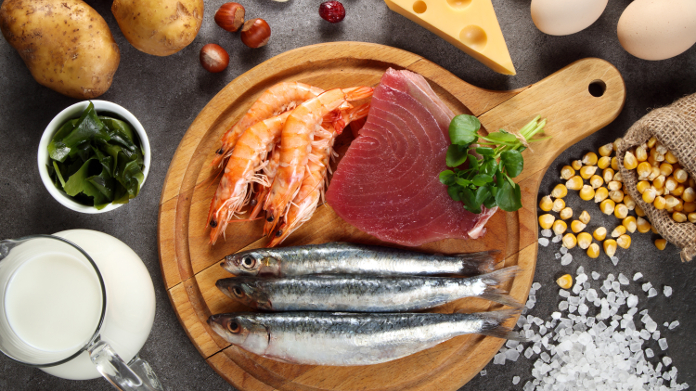
To meet daily iodine requirements, the main dietary sources to be aware of are:
- sea fish;
- seafood;
- seaweed;
- iodised salt;
- egg yolks and milk (7).
Targeted supplementation may also be considered to increase iodine intake, with the recommended daily intake estimated at between 100 and 200 µg/day.
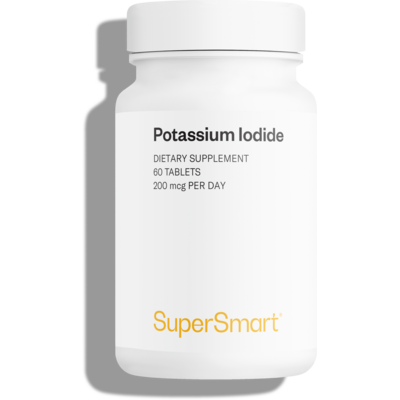
 Discover Potassium Iodide, an iodine supplement with optimal bioavailability, designed to meet the recommended daily intake of iodine.
Selenium: a key factor in thyroid function
Selenium also contributes to the normal functioning of the thyroid.
It is involved in the conversion of thyroxine (T4) into triiodothyronine (T3), the active form of the thyroid hormone.
It is also used to produce selenoproteins, enzymes found mainly in the thyroid. These enzymes have antioxidant properties and protect thyroid cells (8).
A selenium deficiency can therefore disrupt this conversion and lead to a hormonal imbalance. This is why many studies are now looking into the benefits of selenium for thyroid health.
In terms of diet, selenium is mainly found in:
- Brazil nuts;
- fish;
- seafood;
- eggs;
- meat.
When diet alone is not enough, a dietary supplement can help to top up these levels.
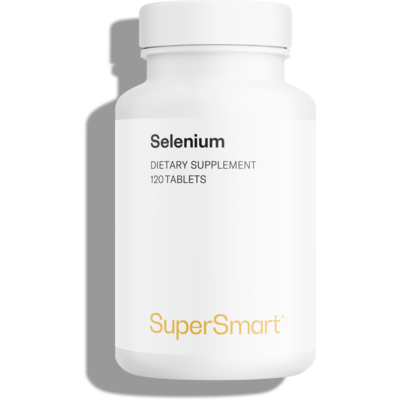
Discover Selenium, a supplement that provides L-selenomethionine, a form of selenium which, according to some research, may help maintain stable selenium levels.
Zinc, iron and other micronutrients: often overlooked players
As well as iodine and selenium, other micronutrients are necessary for the optimal functioning of the metabolic processes involved in the biosynthesis of thyroid hormones.
For example, zinc is one of the micronutrients being studied for its link to thyroid hormone metabolism (9).
It is thought to play a role in the structure of certain receptors and enzymes involved in the action of these hormones, as well as in the regulation of TRH and TSH (hormones of the brain-thyroid axis).
Research into the role of zinc in regulating thyroid hormone metabolism is ongoing.
Within our bodies, iron is necessary for the proper functioning of certain enzymes essential for the production of thyroid hormones.
One study suggests that iron deficiency reduces the synthesis of these hormones as well as the effect of iodine supplementation, whilst iron supplementation enhances it (10).
Meanwhile, B vitamins, particularly vitamins B2, B9 and B12, have been linked to healthy thyroid function in a study involving 387 people (11). This study highlights a strong association between micronutrient levels and thyroid markers.
These various micronutrients are naturally found in a variety of foods:
- oysters;
- seafood;
- meat;
- pulses;
- eggs.
When the diet does not provide all the necessary micronutrients, supplementation may be considered.
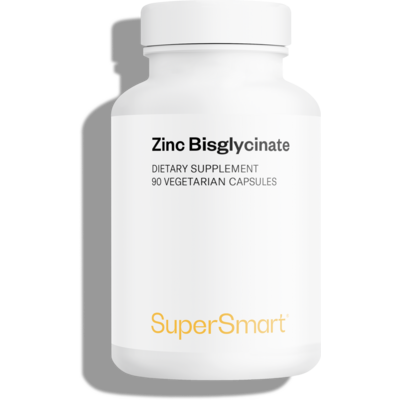
Discover Zinc Bisglycinate, a supplement containing zinc bisglycinate, a form of zinc recognized for its excellent absorption and good digestive tolerance.
Tyrosine, a precursor to thyroid hormones
Thyroid hormones are synthesised from iodine, but also from an amino acid: tyrosine.
As we have seen above, the thyroid needs tyrosine to produce the hormones T3 and T4.
Tyrosine is a non-essential amino acid. This means that the body is able to produce it itself from another amino acid, phenylalanine (11).
It thus differs from minerals such as iodine or zinc, which must be obtained from the diet.
A sufficient protein intake is nevertheless beneficial, as it provides the body with the phenylalanine required for this synthesis (12).
Several protein-rich foods can support this process:
- fish;
- meat;
- eggs;
- dairy products;
- pulses.
However, when there is insufficient tyrosine in the diet, and metabolic demand exceeds the body’s ability to synthesise it internally, supplementation may be beneficial.
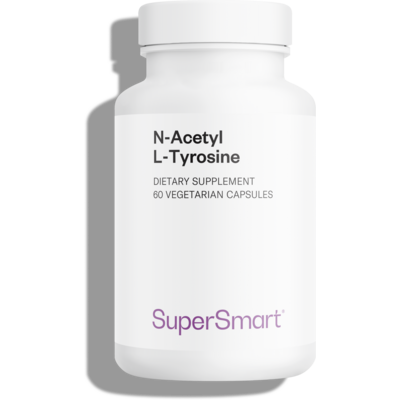
Discover N-Acetyl L-Tyrosine, a dietary supplement containing tyrosine, the amino acid that the body synthesises itself from phenylalanine.
Why does no single nutrient act on its own?
No single food or nutrient, on its own, can support normal thyroid function.
A varied diet remains the best way to meet all your micronutrient requirements.
Overall nutritional quality also matters.
Above all, it is the diversity and quality of the diet as a whole that contribute to the thyroid’s proper functioning.
Protein intake also plays an important role, as it provides the amino acids needed to produce thyroid hormones.
More broadly, an overall balanced lifestyle, sleep, physical activity and stress management all influence the proper functioning of the thyroid and the body as a whole.
Thyroid function therefore depends on a complex interplay of nutritional and environmental factors.
Can a single formula combine several key nutrients for the thyroid?
When dietary intake is insufficient or unbalanced, some people may seek additional nutritional support through supplementation.
A dietary supplement is never a substitute for a balanced diet, but it can help to top up nutrient intake where necessary.
Some formulations therefore combine several nutrients involved in normal thyroid function, such as iodine, selenium, zinc and other nutritional co-factors.
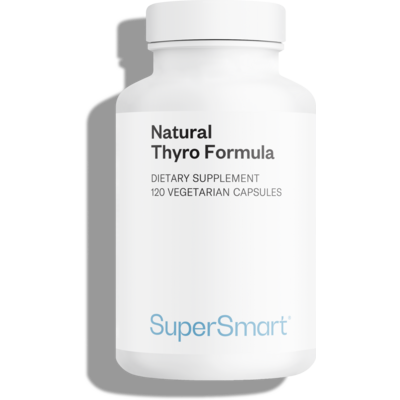
Discover Natural Thyro Formula, a supplement formulated from a blend of nutrients and plant extracts selected to support normal thyroid function.
Diet and the thyroid: mistakes to avoid
It is important not to believe certain misconceptions that circulate about diet and the thyroid:
- believing that a single food can ‘stimulate’ the thyroid;
- consuming large amounts of seaweed or iodine-rich supplements without professional guidance;
- neglecting the overall balance of your diet;
- focusing on a single nutrient whilst neglecting other cofactors.
To support healthy thyroid function through diet, the main aim is to maintain an appropriate and balanced intake of nutrients.
A varied diet therefore remains the primary means of supporting normal thyroid function.
Dietary supplements can then be incorporated into a holistic nutritional approach when used appropriately.
SUPERSMART ADVICE
References
- Stathatos N. Thyroid physiology. Med Clin North Am. 2012 Mar;96(2):165-73. doi: 10.1016/j.mcna.2012.01.007. Epub 2012 Feb 1. PMID: 22443969.
- Chung HR. Iodine and thyroid function. Ann Pediatr Endocrinol Metab. 2014 Mar;19(1):8-12. doi: 10.6065/apem.2014.19.1.8. Epub 2014 Mar 31. PMID: 24926457; PMCID: PMC4049553.
- Köhrle J, Jakob F, Contempré B, Dumont JE. Selenium, the thyroid, and the endocrine system. Endocr Rev. 2005 Dec;26(7):944-84. doi: 10.1210/er.2001-0034. Epub 2005 Sep 20. PMID: 16174820.
- Severo JS, Morais JBS, de Freitas TEC, Andrade ALP, Feitosa MM, Fontenelle LC, de Oliveira ARS, Cruz KJC, do Nascimento Marreiro D. The Role of Zinc in Thyroid Hormones Metabolism. Int J Vitam Nutr Res. 2019 Jul;89(1-2):80-88. doi: 10.1024/0300-9831/a000262. PMID: 30982439
- Sorrenti S, Baldini E, Pironi D, Lauro A, D'Orazi V, Tartaglia F, Tripodi D, Lori E, Gagliardi F, Praticò M, Illuminati G, D'Andrea V, Palumbo P, Ulisse S. Iodine: Its Role in Thyroid Hormone Biosynthesis and Beyond. Nutrients. 2021 Dec 14;13(12):4469. doi: 10.3390/nu13124469. PMID: 34960019; PMCID: PMC8709459.
- Farebrother J, Zimmermann MB, Andersson M. Excess iodine intake: sources, assessment, and effects on thyroid function. Ann N Y Acad Sci. 2019 Jun;1446(1):44-65. doi: 10.1111/nyas.14041. Epub 2019 Mar 20. PMID: 30891786.
- https://www.anses.fr/fr/content/iode-pourquoi-et-comment-en-consommer
- Köhrle J, Jakob F, Contempré B, Dumont JE. Selenium, the thyroid, and the endocrine system. Endocr Rev. 2005 Dec;26(7):944-84. doi: 10.1210/er.2001-0034. Epub 2005 Sep 20. PMID: 16174820.
- Severo JS, Morais JBS, de Freitas TEC, Andrade ALP, Feitosa MM, Fontenelle LC, de Oliveira ARS, Cruz KJC, do Nascimento Marreiro D. The Role of Zinc in Thyroid Hormones Metabolism. Int J Vitam Nutr Res. 2019 Jul;89(1-2):80-88. doi: 10.1024/0300-9831/a000262. PMID: 30982439
- Zimmermann MB, Köhrle J. The impact of iron and selenium deficiencies on iodine and thyroid metabolism: biochemistry and relevance to public health. Thyroid. 2002 Oct;12(10):867-78. doi: 10.1089/105072502761016494. PMID: 12487769.
- Krishnamurthy HK, Reddy S, Jayaraman V, Krishna K, Song Q, Rajasekaran KE, Wang T, Bei K, Rajasekaran JJ. Effect of Micronutrients on Thyroid Parameters. J Thyroid Res. 2021 Sep 28;2021:1865483. doi: 10.1155/2021/1865483. PMID: 35140907; PMCID: PMC8820928.
- Matthews DE. An Overview of Phenylalanine and Tyrosine Kinetics in Humans. J Nutr. 2007 Jun;137(6 Suppl 1):1549S-1555S. doi: 10.1093/jn/137.6.1549S. PMID: 17513423.
Keywords




1 Days
Easy to order products
Easy to order products
Edward P
4 Days
correct product arrived on time
The product arrived on time and appears to be what I ordered (i do not perform any tests outside of my own experience). I have used this Bacillus Subtills for quite over a year, and I am convinced of it's contribution to my microbiome. The product and business model work well.
Lisa
5 Days
All the supplements are of great…
All the supplements are of great quality and they have almost anything you could need
kirstin Torres
5 Days
Easy to order, fast delivery
Easy to order, fast
Sissy Lawson
9 Days
What luck to come across such a clean…
What luck to come across such a clean brand! No bad ingredients in these and a reasonable price for what we're getting.
Bindi S
10 Days
The best supplement for…
The best supplement for hyperpigmentation or melasma. I have struggled with melasma and hyperpigmentation for 10 years. I have tried everything, including lasers. Nothing really worked except this!
NS
12 Days
Great source for high quality…
Great source for high quality supplements
Vikki L
14 Days
Recommended: "Eye Pressure"
(Eye Pressure pills) Highly recommended for glaucoma patients
LM
16 Days
Great follow-up
Great follow-up
Michael Henderson
20 Days
My hair isn't gray.
My hair isn't gray.
TANQUARY Damon
20 Days
The ease of ordering is not the only …
The ease of ordering is not the only reason why I trust Super Smart Supplements. This company researches everything they sell. Educating Me with a wealth knowledge to make Better Supplement choices. The paractin Andrographis is awesome! I noticed less Knee, shoulder or joint pain. Which proves to me, you're never too old to repair what a lifetime of intense usage has done to your body. I recommend SUPER SMART to anyone who is looking to improve their overall health & maintain an active ,pain free life as You age.
Mchael Montalbano
23 Days
Quick shipping and very good quality
Quick shipping and very good quality. I’ve bought from them for the last six months
Monig
25 Days
love the quality of the supplements!
love the quality of the supplements!
Tatiana
27 Days
Came quickly
Came quickly
Courtney Everson
28 Days
Feels great on my skin
I have only used the SuperSmart NAD face cream for a couple of weeks. So I can’t say it transformed my skin yet. However, it absorbs nicely. Is not oily or caused any acne. It feels wonderful in my routine which means I will consistently use every day! I’ve already researched the ingredients so I’m confident it will help clear the zombie cells and keep my skin looking fresh. I’m pleasantly surprised and will repurchase!
Moto