
Pregnancy: should you take vitamin D?
Studies have consistently shown that pregnant women across the world are lacking in vitamin D. Why is this the case and what are the risks of such deficiency? Should mothers-to-be take vitamin D when they are sometimes advised against taking supplements during pregnancy?


Should women take vitamin D in a preventive capacity when pregnant?
All responsible scientific organisations recommend taking vitamin D during pregnancy. The reason is simple: around 35% of expectant mothers are vitamin D-deficient at the start of their 3rd trimester when it occurs in spring and winter (1). And the majority of the remainder have inadequate levels. According to recommendations established recently by the American Society of Endocrinology, and Institute of Medicine (IoM), pregnant women should take 600IU of vitamin D a day, though several studies suggest this dose is arguably too low to reach the target of 30ng/mL.
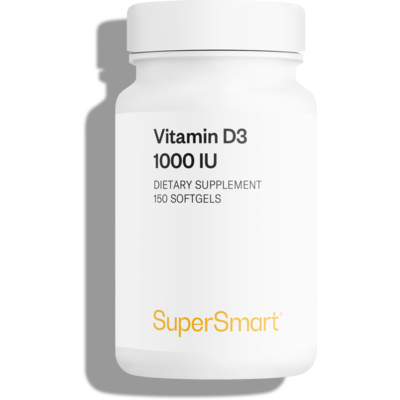
In terms of which supplement to take, there is a choice of oil-based capsules (such as Vitamin D3 1000 IU) to be taken daily to mimic natural intake, a single ampoule containing 100,000 IU, usually recommended in the seventh month of pregnancy, or two 50,000 IU ampoules, one to be taken at the 6th month and one at the 7th.
Certain mothers-to-be are at higher risk and need to be even more careful:
- those with dark skin living at high or mid latitudes, as they need more sunlight to produce the same amount of vitamin D as those with fair skin;
- those who are overweight because adipose tissue under the skin sequesters the vitamin D produced from the sun’s rays;
- those following specific diets (no fish, no eggs, no animal products …) ;
- those living in polluted environments, as CO2 absorbs UV rays;
- those who regularly use anti-UVB creams (with an SPF greater than 15), as these can reduce the amount of UVB penetrating the skin by up to 99%.
To minimize the risk of deficiency, vitamin D supplementation can be initiated before the first trimester, when a woman is trying to conceive.
What are the benefits of supplementing with vitamin D for pregnant women and their babies?
Vitamin D deficiencyis not something to be taken lightly: it is associated with several risks and problems for both mother and fetus, and later for the baby:
- a risk of gestational diabetes and pre-eclampsia (a disease of pregnancy related to high blood pressure) for the mother (2) ;
- a greater likelihood of having to have a Caesarean (3) ;
- a low birthweight for the baby and a medium-term risk of rickets (4) ;
- an increased risk for the baby of developing asthma and type 1 diabetes;
- a risk ofneonatal hypocalcaemia and damage to tooth enamel for the baby.
As we know, vitamin D supports normal immune system and muscle function, and healthy bones and teeth. All physiological functions that develop in the fetus in the early months of pregnancy.
What’s behind this lack of vitamin D during pregnancy?
The latest studies show that for good health, we need to have more than 50 nmol/L of vitamin D circulating in our blood at all times. For the most part, this comes from our bodies’ production: under the effects of the sun’s UVB rays, the skin produces vitamin D from cholesterol and the body stores any excess in the liver. We also obtain it via dietary sources though these are rare (oily fish, dairy products, fortified drinks) and only provide 100-200 units a day (5) when we need 400-800. So in the absence of supplementation, regular exposure to the sun is essential if we are to avoid deficiency.
The problem is that our sedentary lifestyles and clothing habits reduce our exposure to sunlight, especially between October and May, as does pollution in major cities and the use of sunscreen. Some of us will already have negligible reserves in autumn. In pregnancy, the risk is increased tenfold because the body ‘diverts’ the mother’s reserves toward the fetus which needs an increasing amount of vitamin D for skeletal mineralization.
Are there any health risks associated with taking too much vitamin D?
The safe upper level (SUL), established by the IoM (2011) and EFSA (2012), is fixed at 100 µg/jour (4000 IU). The risk of exceeding this amount is zero if you stick closely to the recommendations of the authorities and even those suggested by certain scientific studies. However, some health professionals may recommend higher intakes of vitamin D, depending on your situation (age, sex, ethnicity, latitude, etc.)
If you are pregnant and want to take a supplement (for example, Vitamin D3 1000 IU), you should always consult a health professional for advice on the right dose and best time to take it depending on your chosen supplement (he or she will advise which month to start your vitamin D supplementation, or when to take a single vitamin D ampoule, etc.). This is also an opportunity to consider taking other supplements, such as folic acid (pre- and during early pregnancy) and prenatal multivitamins (vitamin C, vitamin A…)
If you’re pregnant and want to breastfeed your baby, be sure to continue supplementing with vitamin D once you’ve given birth: breastmilk contains very low levels of vitamin D (just 20-60 IU per liter). Here again, seek advice from a health professional.
SuperSmart ADVICE
References
- Madelenat P, Bastian H, Menn S. Supplémentation hivernale au 3e trimestre de la grossesse par une dose de 80 000 UI de vitamine D. J Gynecol Obstet Biol Reprod 2001;30:761-7.
- Maghbooli Z, Hossein-Nezhad A, Karimi F, Shafaei AR, Larijani B. Correlation between vitamin D3 deficiency and insulin resistance in pregnancy. Diabetes Metab Res Rev 2008;24:27-32.
- Merewood A, Mehta SD, Chen TC, Bauchner H, Holick MF. Association between vitamin D deficiency and primary cesarean section. J Clin Endocrinol Metab 2009;94:940-5.
- Palacios C, Kostiuk LK, Peña-Rosas JP. Vitamin D Supplementation for Women During Pregnancy. Cochrane Database Syst Rev 2019;7:CD008873.
- Bui, T.; Christin-Maitre, S. (2011). Vitamine D et grossesse. Annales d'Endocrinologie, 72(), S23–S28. doi:10.1016/S0003-4266(11)70006-3
Keywords





15 Hours
no time to do your market research
no time to do your market research
David Schwartz
2 Days
Always follow through with!
Always follow through with!
DOMINIC
3 Days
Good product's good service
Good product's good service
PERCY
4 Days
Excellent
Excellent, thank you!
WRIGHT Connie
4 Days
I appreciate the ease in ordering the…
I appreciate the ease in ordering the supplements I need from SuperSmart. This is my 3rd order. And I really like it when I’m informed of any specials being offered. Thank you!
Vikki L
9 Days
My Nutritionist
My Nutritionist Dr. Jill MacDougal steer me to these Super Smart vitamins and minerals and I love them! Dr. Jill has Died of Colon Cancer and I will miss her Dearly! Steve
Steve, Flushing, MI
20 Days
We ordered the SuperSmart for nerve…
We ordered the SuperSmart nerve supplement and it actually works as it offers relief for foot pain. Very happy that we decided to give it a try.
Suzanne Poyer
23 Days
very good products
very good products. always receive items in timely manner. enjoy doing business with superSmart.
HOGANSON Mark
33 Days
First bottle has been finished
First bottle has been finished. 2 bottles remaining for 3 month time frame trial as recommended
CORCORAN Pamela
38 Days
repeat customer
recommended by my doctor. easy to create an account. Discounts and specials are appreciated. packaging and delivery is dependable. Capsules easy to digest. I've had some some capsules and tablets that are broken inside their bottles.
Kokee
43 Days
Order was shipped on time and packaged…Wonderful Jobs!
Order was shipped on time and packaged excellently.
DMHoge
49 Days
great products and prices
great products and prices
Marie
55 Days
Easy to navigate site
Easy to navigate site, had what I was searching for, good price. easy order-check out
James Tucker
61 Days
My skin is clearing up nicely!
Pretty good for my skin so far.
Christian
63 Days
The new packaging is excellent
The new packaging is excellent - finally! No more squashed boxes and torn envelopes.
GORAN