
Micronutrition in practice: principle, benefits & key nutrients
Even though they are present in small quantities in our bodies, micronutrients are crucial for our vital functions and natural defences.


What is micronutrition?
Initiated in 1992 by Dr Christian Leclerc, micronutrition is the branch of nutrition that focuses on our daily intake of micronutrients, nutrients needed by the body in small quantities.
These include vitamins, minerals, trace elements and essential fatty acids, but also polyphenols and even probiotics.
Unlike macronutrients – proteins, carbohydrates and fats – on which nutritionists focus, micronutrients do not provide energy in the form of calories.
But by acting as cofactors in numerous metabolic reactions, they play a fundamental role in the assimilation, transformation and use of these macronutrients (1).
As advocates of an individualised approach, micronutrition specialists attach great importance to nutritional advice and personalised supplementation.
They consider each person's lifestyle, genetic predisposition, state of health and specific needs in order to detect any deficiencies and adjust their diet accordingly. They rely on dietary and functional questionnaires, supplemented if necessary by biological explorations.
What are the benefits of micronutrition?
By correcting certain nutritional imbalances, micronutrition is first and foremost a formidable preventive tool, particularly in the management of metabolic and cardiovascular risk.
Replacing saturated fats with unsaturated fats in the diet, for example, reduces blood cholesterol levels that are too high and can lead to coronary heart disease (2).
For women with osteoporosis or brittle bones, particular attention should be paid to calcium and vitamin D levels, as these help maintain normal bones (3).
Micronutrition also appears to be a tool for optimising health. Among other things, it addresses digestive discomfort (by managing food intolerances where necessary), functional and mood disorders (by monitoring magnesium intake, which contributes to normal psychological function), as well as sports performance and recovery (4).
Micronutrition in practice: nutrients and food supplements to focus on
Magnesium
Magnesium is an essential mineral found naturally in cocoa, brown rice, pulses and oleaginous fruit.
Found in large part in bones and teeth, it is involved in over 300 chemical reactions.
It contributes to maintaining a normal energy metabolism, normal functioning of the nervous system and muscles, and reducing fatigue (5-6).
It is also involved in protein synthesis and electrolyte balance.
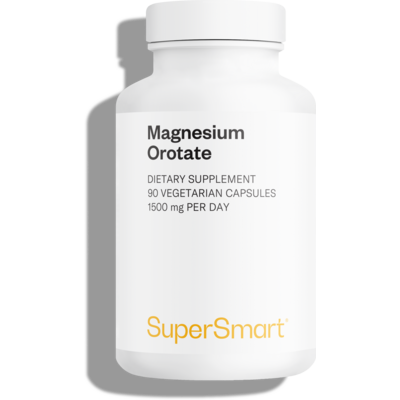
For maximum absorption, opt for supplementation with magnesium orotate (the form favoured by Magnesium Orotate), as its combination with orotic acid facilitates its entry into the cells (7).
Vitamin D
Vitamin D deficiency is extremely widespread throughout the world (8).
Not very abundant in our diets, this fat-soluble vitamin is primarily synthesised by exposing the skin to sunlight.
It contributes to the absorption and normal use of calcium and phosphorus, supporting normal bone growth and development in children and playing a key role in bone and dental health (9).
It also plays a part in the normal functioning of the immune system, with lymphocytes expressing vitamin D receptors on their membranes (10).
People with little exposure to the sun, such as those living in the northern hemisphere during the winter, therefore benefit from supplementing with a bioavailable form (such as Vitamin D3 5000 IU, packaged in oily capsules for maximum absorption).
Omega-3
Classified as essential fatty acids, omega-3s come in three main active forms: ALA (alpha-linolenic acid), EPA (eicosapentaenoic acid) and DHA (docosahexaenoic acid).
EPA and DHA, found in seafood and oily fish, have a triple advantage for the heart: they help maintain heart function, blood pressure and normal triglyceride levels (11).
On paper, EPA and DHA can be synthesised from ALA, the plant precursor concentrated in walnuts, rapeseed and linseed.
In practice, this conversion remains very limited, mainly because of strong competition with omega-6s, which are over-represented in our diet and monopolise the same enzymes (12-13).
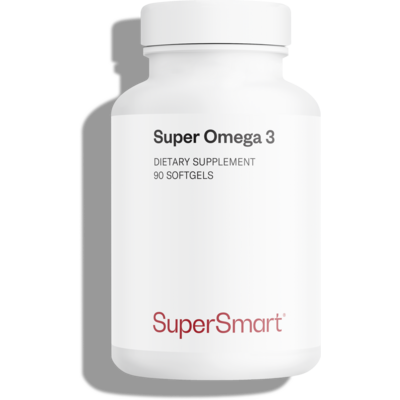
So it's best to ensure that you get enough EPA and DHA directly to cover your daily requirements (for example, by supplementing with Super Omega 3, which combines EPA and DHA in a purified formula, guaranteed free of pollutant residues).
Zinc
Zinc is an essential trace element that takes part in over 200 enzymatic reactions in the human body.
Involved in the synthesis of proteins, particularly keratin, it helps maintain normal skin, hair and nails (14).
It also helps to protect cells against oxidative stress and to synthesise DNA, as well as supporting reproduction and fertility by maintaining normal blood testosterone levels (15-16).
While oysters are full of it, red meat, poultry, eggs, legumes and pumpkin seeds also contain a significant amount.
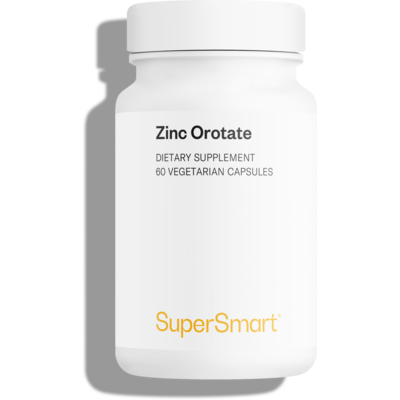
As with magnesium, its combination with orotic acid (found in Zinc Orotate) ensures excellent assimilation.
Folates (vitamin B9)
A member of the large family of B vitamins, vitamin B9 (or folate) is involved in the normal functioning of the immune system, normal psychological function and reducing fatigue (17).
More generally, it plays a key role in the mechanisms of cell division: for example, it contributes to the normal synthesis of the amino acids that make up proteins, as well as to the normal formation of blood cells (18).
In pregnant women, it plays a vital role in the healthy development of the foetus by supporting the growth of maternal tissue during pregnancy (19).
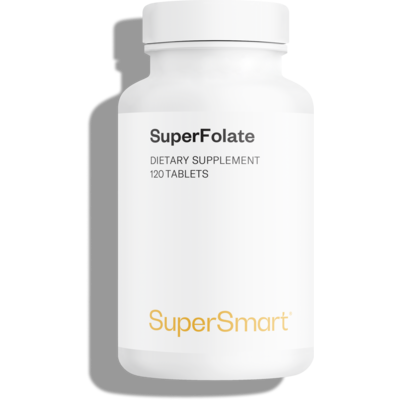
To increase your intake, eat more green leafy vegetables, offal and legumes, or use the latest generation of supplements (such as Super Folate, a patented form of vitamin B9 that can be used directly by cells).
Probiotics
Probiotics have a special place among micronutrients.
Although they are not classed as essential nutritional elements, these living micro-organisms (mainly lactic acid bacteria) contribute to a healthy diet by supporting the balance of the intestinal flora (20).
The theory that a healthy microbiota has a positive impact on digestion, immunity and mental health is constantly being confirmed by scientific publications (21-22).
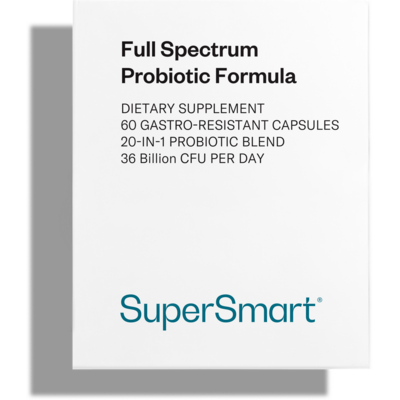
To reap the full benefits, we recommend eating fermented foods every day (such as yoghurt, kefir or sauerkraut) or taking a synergistic supplement (Full Spectrum Probiotic combines a full spectrum of 20 probiotic strains in a single capsule to cover the widest possible range of microbiota).
SUPERSMART ADVICE
References
- England E, Cheng C. Nutrition: Micronutrients. FP Essent. 2024 Apr;539:13-17. PMID: 38648170.
- Pérez-Jiménez F, López-Miranda J, Mata P. Protective effect of dietary monounsaturated fat on arteriosclerosis: beyond cholesterol. 2002 Aug;163(2):385-98. doi: 10.1016/s0021-9150(02)00033-3. PMID: 12052487.
- Sunyecz JA. The use of calcium and vitamin D in the management of osteoporosis. Ther Clin Risk Manag. 2008 Aug;4(4):827-36. doi: 10.2147/tcrm.s3552. PMID: 19209265; PMCID: PMC2621390.
- Botturi A, Ciappolino V, Delvecchio G, Boscutti A, Viscardi B, Brambilla P. The Role and the Effect of Magnesium in Mental Disorders: A Systematic Review. 2020 Jun 3;12(6):1661. doi: 10.3390/nu12061661. PMID: 32503201; PMCID: PMC7352515.
- Pickering G, Mazur A, Trousselard M, Bienkowski P, Yaltsewa N, Amessou M, Noah L, Pouteau E. Magnesium Status and Stress: The Vicious Circle Concept Revisited. 2020 Nov 28;12(12):3672. doi: 10.3390/nu12123672. PMID: 33260549; PMCID: PMC7761127.
- Cox IM, Campbell MJ, Dowson D. Red blood cell magnesium and chronic fatigue syndrome. 1991 Mar 30;337(8744):757-60. doi: 10.1016/0140-6736(91)91371-z. PMID: 1672392.
- Schiopu C, Ștefănescu G, Diaconescu S, Bălan GG, Gimiga N, Rusu E, Moldovan CA, Popa B, Tataranu E, Olteanu AV, Boloș A, Ștefănescu C. Magnesium Orotate and the Microbiome-Gut-Brain Axis Modulation: New Approaches in Psychological Comorbidities of Gastrointestinal Functional Disorders. Nutrients. 2022 Apr 9;14(8):1567. doi: 10.3390/nu14081567. PMID: 35458129; PMCID: PMC9029938.
- Kennel KA, Drake MT, Hurley DL. Vitamin D deficiency in adults: when to test and how to treat. Mayo Clin Proc. 2010 Aug;85(8):752-7; quiz 757-8. doi: 10.4065/mcp.2010.0138. PMID: 20675513; PMCID: PMC2912737.
- DeLuca HF. The metabolism and functions of vitamin D. Adv Exp Med Biol. 1986;196:361-75. doi: 10.1007/978-1-4684-5101-6_24. PMID: 3012979.
- Aranow C. Vitamin D and the immune system. J Investig Med. 2011 Aug;59(6):881-6. doi: 10.2310/JIM.0b013e31821b8755. PMID: 21527855; PMCID: PMC3166406.
- Innes JK, Calder PC. Marine Omega-3 (N-3) Fatty Acids for Cardiovascular Health: An Update for 2020. Int J Mol Sci. 2020 Feb 18;21(4):1362. doi: 10.3390/ijms21041362. PMID: 32085487; PMCID: PMC7072971.
- Takic M, Pokimica B, Petrovic-Oggiano G, Popovic T. Effects of Dietary α-Linolenic Acid Treatment and the Efficiency of Its Conversion to Eicosapentaenoic and Docosahexaenoic Acids in Obesity and Related Diseases. 2022 Jul 13;27(14):4471. doi: 10.3390/molecules27144471. PMID: 35889342; PMCID: PMC9317994.
- Taha AY, Cheon Y, Faurot KF, Macintosh B, Majchrzak-Hong SF, Mann JD, Hibbeln JR, Ringel A, Ramsden CE. Dietary omega-6 fatty acid lowering increases bioavailability of omega-3 polyunsaturated fatty acids in human plasma lipid pools. Prostaglandins Leukot Essent Fatty Acids. 2014 May;90(5):151-7. doi: 10.1016/j.plefa.2014.02.003. Epub 2014 Feb 24. PMID: 24675168; PMCID: PMC4035030.
- Thompson KG, Kim N. Dietary supplements in dermatology: A review of the evidence for zinc, biotin, vitamin D, nicotinamide, and Polypodium. J Am Acad Dermatol. 2021 Apr;84(4):1042-1050. doi: 10.1016/j.jaad.2020.04.123. Epub 2020 Apr 29. PMID: 32360756.
- Jarosz M, Olbert M, Wyszogrodzka G, Młyniec K, Librowski T. Antioxidant and anti-inflammatory effects of zinc. Zinc-dependent NF-κB signaling. Inflammopharmacology. 2017 Feb;25(1):11-24. doi: 10.1007/s10787-017-0309-4. Epub 2017 Jan 12. PMID: 28083748; PMCID: PMC5306179.
- Prasad AS, Mantzoros CS, Beck FW, Hess JW, Brewer GJ. Zinc status and serum levels of healthy adults. 1996 May;12(5):344-8. doi: 10.1016/s0899-9007(96)80058-x. PMID: 8875519.
- Kunisawa J, Kiyono H. Vitamin-mediated regulation of intestinal immunity. Front Immunol. 2013 Jul 11;4:189. doi: 10.3389/fimmu.2013.00189. PMID: 23874335; PMCID: PMC3708512.
- Chen MY, Rose CE, Qi YP, Williams JL, Yeung LF, Berry RJ, Hao L, Cannon MJ, Crider KS. Defining the plasma folate concentration associated with the red blood cell folate concentration threshold for optimal neural tube defects prevention: a population-based, randomized trial of folic acid supplementation. Am J Clin Nutr. 2019 May 1;109(5):1452-1461. doi: 10.1093/ajcn/nqz027. PMID: 31005964; PMCID: PMC7099800.
- Greenberg JA, Bell SJ, Guan Y, Yu YH. Folic Acid supplementation and pregnancy: more than just neural tube defect prevention. Rev Obstet Gynecol. 2011 Summer;4(2):52-9. PMID: 22102928; PMCID: PMC3218540.
- Hemarajata P, Versalovic J. Effects of probiotics on gut microbiota: mechanisms of intestinal immunomodulation and neuromodulation. Therap Adv Gastroenterol. 2013 Jan;6(1):39-51. doi: 10.1177/1756283X12459294. PMID: 23320049; PMCID: PMC3539293.
- Gao J, Zhao L, Cheng Y, Lei W, Wang Y, Liu X, Zheng N, Shao L, Chen X, Sun Y, Ling Z, Xu W. Probiotics for the treatment of depression and its comorbidities: A systemic review. Front Cell Infect Microbiol. 2023 Apr 17;13:1167116. doi: 10.3389/fcimb.2023.1167116. PMID: 37139495; PMCID: PMC10149938.
- Latif A, Shehzad A, Niazi S, Zahid A, Ashraf W, Iqbal MW, Rehman A, Riaz T, Aadil RM, Khan IM, Özogul F, Rocha JM, Esatbeyoglu T, Korma SA. Probiotics: mechanism of action, health benefits and their application in food industries. Front Microbiol. 2023 Aug 17;14:1216674. doi: 10.3389/fmicb.2023.1216674. Erratum in: Front Microbiol. 2024 Feb 14;15:1378225. doi: 10.3389/fmicb.2024.1378225. PMID: 37664108; PMCID: PMC10470842.
Keywords





1 Days
correct product arrived on time
The product arrived on time and appears to be what I ordered (i do not perform any tests outside of my own experience). I have used this Bacillus Subtills for quite over a year, and I am convinced of it's contribution to my microbiome. The product and business model work well.
Lisa
1 Days
All the supplements are of great…
All the supplements are of great quality and they have almost anything you could need
kirstin Torres
1 Days
Easy to order, fast delivery
Easy to order, fast
Sissy Lawson
5 Days
What luck to come across such a clean…
What luck to come across such a clean brand! No bad ingredients in these and a reasonable price for what we're getting.
Bindi S
6 Days
The best supplement for…
The best supplement for hyperpigmentation or melasma. I have struggled with melasma and hyperpigmentation for 10 years. I have tried everything, including lasers. Nothing really worked except this!
NS
9 Days
Great source for high quality…
Great source for high quality supplements
Vikki L
11 Days
Recommended: "Eye Pressure"
(Eye Pressure pills) Highly recommended for glaucoma patients
LM
12 Days
Great follow-up
Great follow-up
Michael Henderson
16 Days
My hair isn't gray.
My hair isn't gray.
TANQUARY Damon
16 Days
The ease of ordering is not the only …
The ease of ordering is not the only reason why I trust Super Smart Supplements. This company researches everything they sell. Educating Me with a wealth knowledge to make Better Supplement choices. The paractin Andrographis is awesome! I noticed less Knee, shoulder or joint pain. Which proves to me, you're never too old to repair what a lifetime of intense usage has done to your body. I recommend SUPER SMART to anyone who is looking to improve their overall health & maintain an active ,pain free life as You age.
Mchael Montalbano
19 Days
Quick shipping and very good quality
Quick shipping and very good quality. I’ve bought from them for the last six months
Monig
22 Days
love the quality of the supplements!
love the quality of the supplements!
Tatiana
24 Days
Came quickly
Came quickly
Courtney Everson
24 Days
Feels great on my skin
I have only used the SuperSmart NAD face cream for a couple of weeks. So I can’t say it transformed my skin yet. However, it absorbs nicely. Is not oily or caused any acne. It feels wonderful in my routine which means I will consistently use every day! I’ve already researched the ingredients so I’m confident it will help clear the zombie cells and keep my skin looking fresh. I’m pleasantly surprised and will repurchase!
Moto
27 Days
Excellent quality
Excellent quality, I can usually tell the difference when I get other cheaper brands that are not as good. Supersmart is my first choice
MMA TUBE