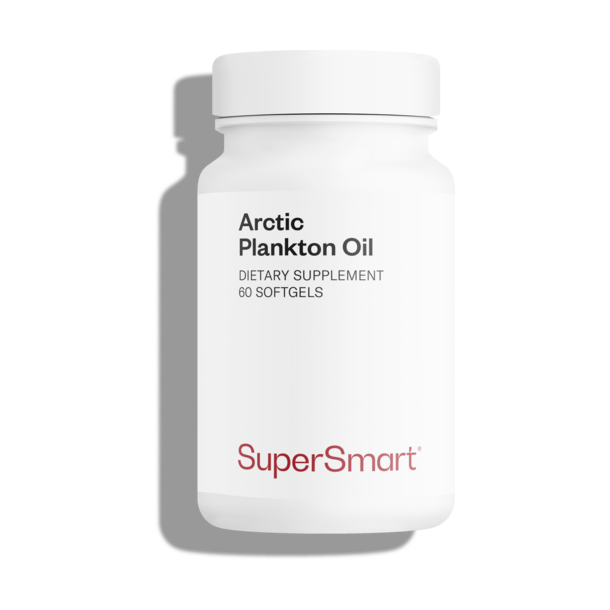
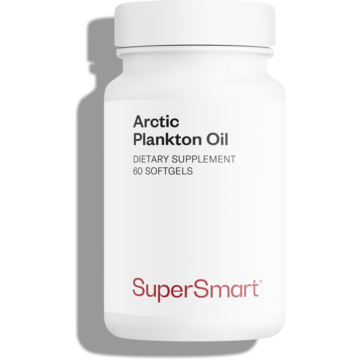
Arctic Plankton Oil is an omega-3 fatty acid supplement produced from Calanus finmarchicus, a zooplankton species found in Arctic waters. It provides a marine-derived source of omega-3 fatty acids as part of a balanced nutritional approach.*
This oil offers a source of omega-3 fatty acids obtained from a low-trophic marine organism and is included to support overall wellness and lipid intake as part of a healthy diet.*
Who Is Arctic Plankton Oil Intended For?
Arctic Plankton Oil is suitable for individuals seeking to complement their dietary intake of omega-3 fatty acids as part of a balanced lifestyle.*
Omega-3 fatty acids are considered important dietary components, and supplementation may be considered when dietary intake is insufficient.*
What Are the Characteristics of Arctic Plankton Oil?
Arctic Plankton Oil contains several types of naturally occurring fatty acids present in marine organisms, delivered in a unique lipid structure.*
- EPA and DHA, long-chain omega-3 fatty acids commonly found in marine oils.*
- Stearidonic acid (SDA), a plant- and marine-derived omega-3 fatty acid.*
- Astaxanthin, a naturally occurring carotenoid that contributes to the antioxidant stability of marine lipids.*
- Omega-9 fatty acids, which are naturally present in marine lipid sources.*
Omega-3 Lipid Structure
Omega-3 fatty acids in Arctic Plankton Oil are present in a wax ester form, a naturally occurring lipid structure found in certain marine organisms.*
These lipids are digested through normal physiological processes and contribute to dietary fatty acid intake when used as part of a balanced diet.*
What Is Known About Omega-3 Fatty Acids?
Omega-3 fatty acids are structural components of cell membranes and are involved in normal cellular processes throughout the body.*
- Participate in maintaining the structural integrity of cell membranes.*
- Contribute to normal lipid metabolism as part of overall physiological balance.*
- Are commonly included in dietary strategies focused on general wellness.*
Why Choose Marine-Sourced Omega-3?
Marine organisms are a direct dietary source of EPA and DHA. These fatty acids are typically obtained through the diet or supplementation when intake from food sources is limited.*
Arctic Plankton Oil provides an alternative marine-derived source of omega-3 fatty acids obtained from zooplankton harvested in Arctic waters under regulated conditions.*
How Is Arctic Plankton Oil Produced?
Arctic Plankton Oil is produced from Calanus finmarchicus, a zooplankton species harvested in accordance with sustainability guidelines established by Scandinavian regulatory bodies.*
As a low-trophic marine organism, Calanus finmarchicus does not bioaccumulate heavy metals in the same way as larger predatory fish, contributing to the purity profile of the oil.*
How Should Arctic Plankton Oil Be Used?
Follow the usage instructions provided on the product label. Consistent use over time may be considered as part of a nutritional routine focused on maintaining adequate omega-3 intake.*
As with any dietary supplement, individuals who are pregnant, nursing, taking medications, or managing health conditions should consult a qualified healthcare professional before use.*
Note: This product is intended to complement a varied, balanced diet and a healthy lifestyle. It should not be used as a substitute for professional medical advice.*
WARNINGS
Do not exceed the recommended daily dose. This product is a nutritional supplement and should not be used as a substitute for a varied and balanced diet or a healthy lifestyle.
STORAGE
Store in a cool, dry place away from direct sunlight, heat, and humidity.
Keep out of reach of children.
PREGNANCY AND MEDICAL CONDITIONS
If you are pregnant, breastfeeding, or have any medical conditions, consult your healthcare provider before using this product.
SUPPLEMENT INTERACTIONS
Consult your healthcare provider before use, especially if you are taking any medications or other supplements as there may be potential interactions.
*These statements have not been evaluated by the Food and Drug Administration. This product is not intended to diagnose, treat, cure, or prevent any disease.
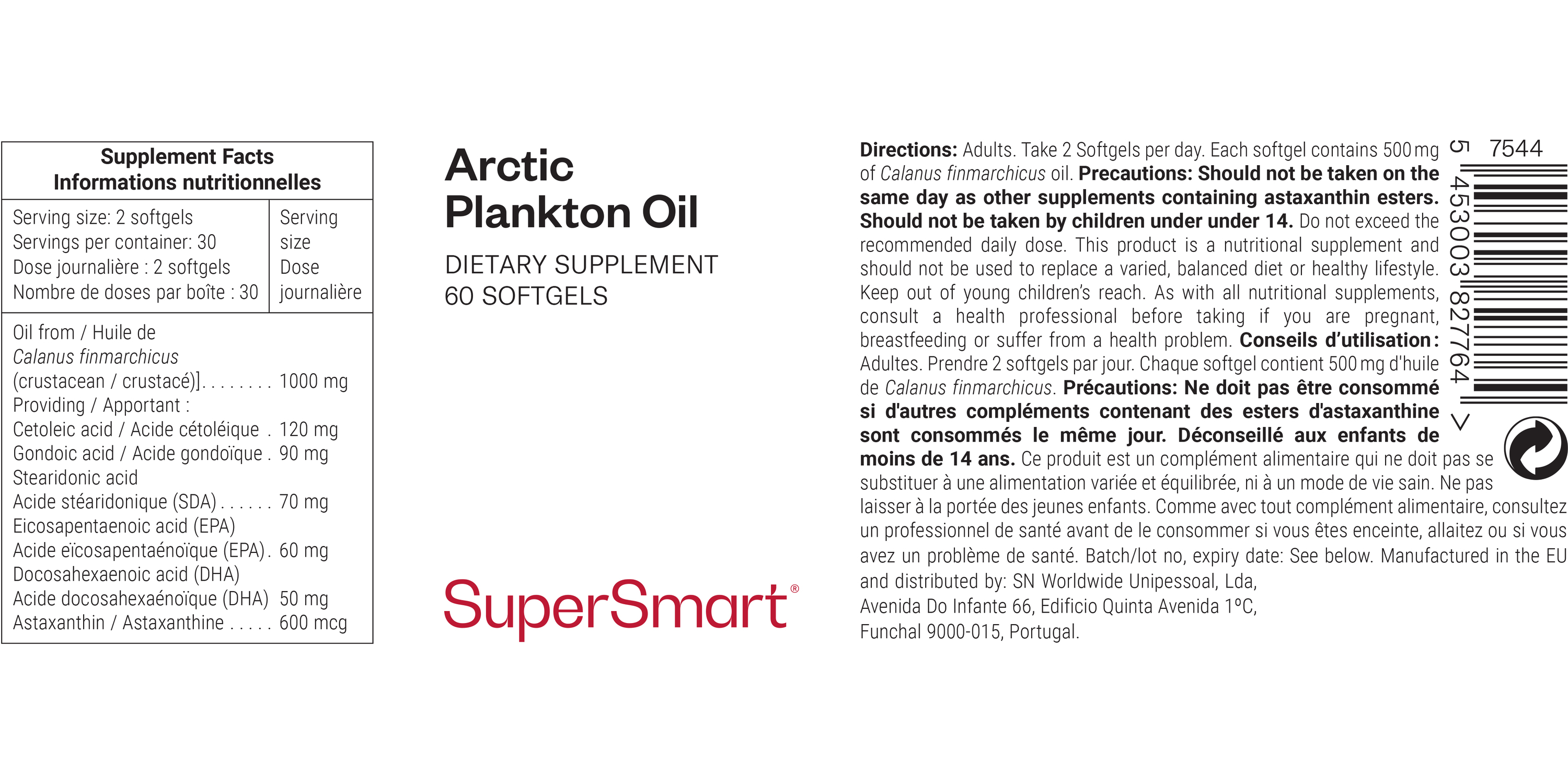
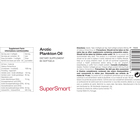
Daily dose: 2 softgels
Number of doses per pack: 30 |
Amount per dose |
| Calanus® Oil (Oil of Calanus finmarchicus) |
1,000 mg |
| Cetoleic acid |
120 mg |
| Gondoic acid |
90 mg |
| Stearidonic acid (SDA) |
70 mg |
| Eicosapentaenoic acid (EPA) |
60 mg |
| Docosahexaenoic acid (DHA) |
50 mg |
| Astaxanthin |
600 mcg |
| Calanus® Oil, Calanus, Norway. |
Serving size: Take 2 softgels a day. Each softgel contains 500 mg of Calanus® Oil.
Servings per container: 30
Storage: Store away from direct light, heat, and humidity.
Warnings: Should not be taken on the same day as other supplements containing astaxanthin esters.
Cautions: For adults only. Should not be taken by infants, children under 3, and those under 14. Do not exceed the recommended daily dose. Keep out of reach of children. Consult a healthcare provider before taking this supplement and if you are pregnant, breastfeeding, or having health concerns.*
This product is a dietary supplement and should not be used as a substitute for a varied, balanced diet and a healthy lifestyle.
- Cook, C. M., Larsen, T. S., Derrig, L. D., Kelly, K. M., & Tande, K. S. (2016). Wax Ester Rich Oil From The Marine Crustacean, Calanus finmarchicus, is a Bioavailable Source of EPA and DHA for Human Consumption. Lipids, 51(10), 1137–1144. doi:10.1007/s11745-016-4189-y
- R. W. Mitchell et G. M. Hatch, « Fatty acid transport into the brain : of fatty acid fables and lipid tails », Prostaglandins Leukot. Essent. Fatty Acids, vol. 85, p. 293 302, 2011
- Y. Freund Levi, I. Vedin, T. Cederholm, H. Basun, G. Faxén Irving, M. Eriksdotter, E. Hjorth, M. Schultzberg, B. Vessby, L.-O. Wahlund, N. Salem Jr., et J. Palmblad, « Transfer of omega-3 fatty acids across the blood-brain barrier after dietary supplementation with a docosahexaenoic acid-rich omega-3 fatty acid preparation in ... : the omegaAD study », J. Intern. Med., vol. 275, p. 428 436, 2014.
- Dietary monounsaturated Fatty acids are ... factors. Gillingham LG, Harris-Janz S, Jones PJ. Lipids. 2011 Mar;46(3):209-28.
- Guerin M, Huntley ME, Olaizola M. Haematococcus astaxanthin: applications for human health and nutrition. Trends Biotech. 2003; May 21(5):210-216.
- Höper, A. C., Salma, W., Sollie, S. J., Hafstad, A. D., Lund, J., Khalid, A. M., … Larsen, T. S. (2013). Wax Esters from the Marine Copepod Calanus finmarchicus ... in Mice. The Journal of Nutrition, 144(2), 164–169. doi:10.3945/jn.113.182501
- Höper, A. C., Salma, W., Khalid, A. M., Hafstad, A. D., Sollie, S. J., Raa, J., … Aasum, E. (2013). Oil from the marine zooplankton Calanus finmarchicus ... mice. British Journal of Nutrition, 110(12), 2186–2193. doi:10.1017/s0007114513001839
- J. L. Breslow, « n-3 Fatty acids and ... », Am. J. Clin. Nutr., vol. 83, p. 1477 1482, 2006
- W. S. Harris, « n-3 Fatty acids and serum lipoproteins : animal studies », Am. J. Clin. Nutr., vol. 65, p. 1611 1616, 1997
- L. Monnier et C. Colette, « Acides gras oméga 3 et ... : la part du vrai », Médecine Mal. Métaboliques, vol. 5, no 3, p. 269 277, 2011
- M. Lavialle et S. Layé, « Acides gras poly-insaturés (oméga 3, oméga 6) et fonctionnement du système nerveux central », Innov. Agron., vol. 10, p. 25 42, 2010.
- Bretillon, L., Thuret, G., Grégoire, S., Acar, N., Joffre, C., Bron, A.M., Gain, P., CreuzotGarcher, C.P., 2008b. Lipid and fatty acid profile of the retina, retinal pigment epithelium/choroid, and the lacrimal gland, and associations with adipose tissue fatty acids in human subjects. Exp. Eye Res. 87, 521–528. doi:10.1016/j.exer.2008.08.010
- Chong, E.W.-T., Robman, L.D., Simpson, J.A., Hodge, A.M., Aung, K.Z., Dolphin, T.K., English, D.R., Giles, G.G., Guymer, R.H., 2009. Fat consumption and its association with ... . Arch. Ophthalmol. 127, 674–680. doi:10.1001/archophthalmol.2009.60
- P. Simopoulos, « Omega-6/omega-3 essantial fatty acid ratio and ... », Food Rev. Int., vol. 20, no 1, p. 77 90, 2004.
- P. Simopoulos, « The omega-6/omega-3 fatty acid ratio : ... », Ol. Corps Gras Lipides, vol. 17, no 5, p. 267 275, 2010.
- U. Gogus et C. Smith, « n-3 Omega fatty acids : a review of current knowledge », Int. J. Food Sci. Technol., vol. 45, p. 417 436, 2010.
- K. S. Broughton, C. S. Johnson, B. K. Pace, M. Liebman, et K. M. Kleppinger, « ... with n-3 fatty acid ingestion are related to 5-series leukotriene production », Am. J. Clin. Nutr., vol. 65, p. 1011 1017, 1997.