
Red vine: 4 health benefits you need to know
Red vine is much more than a plant associated with wine: it has been used since ancient times to support venous circulation and relieve the sensation of heavy legs. Here's what you need to know to take advantage of its benefits.


What is red vine?
Red vine (Vitis vinifera) is a climbing plant belonging to the Vitaceae family; it has been cultivated for thousands of years for its grapes and has also long been used in traditional phytotherapy.
In ancient civilisations – particularly among the Greeks and Romans – its leaves, fruit and sometimes the pomace were consumed in the form of infusions, macerations or extracts, primarily to support the circulatory system and maintain leg comfort.
Even today, this plant is of particular interest for its traditional action on venous tone and microcirculation.
The 4 recognized benefits of red vine
Red vine is naturally rich in polyphenols, flavonoids, tannins and proanthocyanidin oligomers (OPCs), plant compounds renowned for their antioxidant activity. It has 4 recognized health benefits.
Improving venous health
Red vine leaves are naturally rich in bioflavonoids (including anthocyanins and flavonic derivatives), which help to maintain good blood circulation.
They are recognized for their role in supporting venous tone and capillary resistance, promoting better venous return, particularly in the lower limbs.
This action contributes to leg comfort and a feeling of lightness.
At a biological level, certain in vitro studies have shown that red vine leaf extracts modulate the expression of cellular mediators involved in local inflammatory responses, notably IL-8, a factor associated with vascular permeability (1).
Anti-edema and draining effects
Red vine leaf is traditionally used for its beneficial effect on venous circulation, which may help to limit the sensation of swelling in the legs and ankles associated with poor redistribution of body fluids.
In a randomised controlled clinical trial, participants with venous circulation problems observed a significant reduction in calf volume after 12 weeks of supplementation, accompanied by an improvement in leg comfort (2).
Depending on the dose used (360 or 720 mg per day), the average reduction observed was between 75 and 100 grams, reflecting a measurable modulation of tissue volumes.
These results suggest that red vine leaf may contribute to a better distribution of fluids in the tissues, making the lower limbs feel lighter and more comfortable.
Protective antioxidant action
Red vine leaf is naturally rich in flavonoids and proanthocyanidins (OPCs), a family of polyphenols renowned for their strong antioxidant activity.
These compounds help to protect cells against oxidative stress, a phenomenon implicated in cell aging and tissue fragility, particularly in the lining of blood vessels.
Scientific studies indicate that OPCs from grapes may help to reduce certain markers of oxidative stress on DNA, and other research suggests an increase in the overall antioxidant capacity of plasma in subjects who have consumed procyanidin-rich extracts (4).
These data support the hypothesis that red vine may help to strengthen the body's natural defenses against oxidative damage, thereby helping to maintain vascular health.
Support for microcirculation
The polyphenols contained in red vine, in particular flavonoids and proanthocyanidins, have been studied for their role in maintaining the integrity of small blood vessels and vascular flexibility.
Some research suggests that these compounds may have a positive influence on microcirculation, promoting better tissue perfusion and a more efficient supply of oxygen at the cellular level.
This action would partly explain the traditional interest in red vine for sensations of heavy legs or circulatory discomfort.
In a study carried out on people with venous disorders, an extract of Vitis vinifera showed an improvement in certain circulatory parameters, in particular a reduction in venous reflux time and a decrease in the volume of the lower limbs (4).
These data support the idea that red vine could help preserve functional microcirculation, a key element in daily vascular comfort.
Taking red vine as a dietary supplement
Supplementation is a valuable option for benefiting from red grapevine's active compounds in a standardized and practical way, particularly when diet alone is not enough to achieve a regular intake of polyphenols.
Some formulas combine different parts of the vine – the leaves, seeds and pomace – which are naturally rich in flavonoids, tannins and proanthocyanidins.
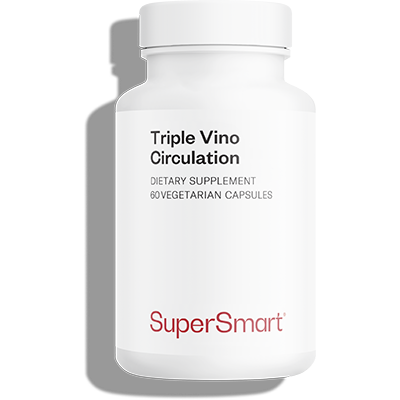
 Discover Triple Vino Circulation, a complete formula combining red vine leaves, grape seeds and grape marc for overall support of circulatory balance.
Resveratrol is one of the most studied polyphenols derived from grapes and certain plants (in particular Vitis vinifera and Polygonum cuspidatum).
It is the subject of growing scientific interest due to its antioxidant properties and possible interactions with cellular systems involved in protecting tissues from oxidative aging (5).
Some research suggests a potential role for resveratrol in modulating antioxidant and inflammatory mechanisms, as well as in metabolic pathways associated with cellular longevity.
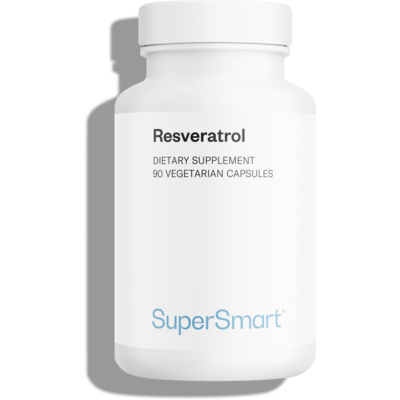
Discover Resveratrol, a concentrated extract from Vitis vinifera and Polygonum cuspidatum, formulated to provide a targeted supply of polyphenols.
As with all dietary supplements, red vine and resveratrol should be used in recommended doses. Medical advice is advised in the event of ongoing treatment, a particular condition (pregnancy, breastfeeding) or circulatory sensitivity.
SUPERSMART ADVICE
References
- Sangiovanni E, Di Lorenzo C, Piazza S, Manzoni Y, Brunelli C, Fumagalli M, Magnavacca A, Martinelli G, Colombo F, Casiraghi A, Melzi G, Marabini L, Restani P, Dell'Agli M. Vitis vinifera Leaf Extract Inhibits In Vitro Mediators of Inflammation and Oxidative Stress Involved in Inflammatory-Based Skin Diseases. Antioxidants (Basel). 2019 May 16;8(5):134. doi: 10.3390/antiox8050134. PMID: 31100904; PMCID: PMC6562865.
- Azhdari M, Zilaee M, Karandish M, Hosseini SA, Mansoori A, Zendehdel M, Khodarahpour S. Red vine leaf extract (AS 195) can improve some signs and symptoms of chronic venous insufficiency, a systematic review. Phytother Res. 2020 Oct;34(10):2577-2585. doi: 10.1002/ptr.6705. Epub 2020 Apr 21. PMID: 32314844.
- Kalus U, Koscielny J, Grigorov A, Schaefer E, Peil H, Kiesewetter H. Improvement of cutaneous microcirculation and oxygen supply in patients with chronic venous insufficiency by orally administered extract of red vine leaves AS 195: a randomised, double-blind, placebo-controlled, crossover study. Drugs R D. 2004;5(2):63-71. doi: 10.2165/00126839-200405020-00001. PMID: 15293865.
- Schön C, Allegrini P, Engelhart-Jentzsch K, Riva A, Petrangolini G. Grape Seed Extract Positively Modulates Blood Pressure and Perceived Stress: A Randomized, Double-Blind, Placebo-Controlled Study in Healthy Volunteers. Nutrients. 2021 Feb 17;13(2):654. doi: 10.3390/nu13020654. PMID: 33671310; PMCID: PMC7922661.
- Gal, R.; Deres, L.; Toth, K.; Halmosi, R.; Habon, T. The Effect of Resveratrol on the Cardiovascular System from Molecular Mechanisms to Clinical Results. Int. J. Mol. Sci. 2021, 22, 10152.
Keywords




1 Days
Great source for high quality…
Great source for high quality supplements
Vikki L
4 Days
Recommended: "Eye Pressure"
(Eye Pressure pills) Highly recommended for glaucoma patients
LM
5 Days
Great follow-up
Great follow-up
Michael Henderson
9 Days
My hair isn't gray.
My hair isn't gray.
TANQUARY Damon
9 Days
The ease of ordering is not the only …
The ease of ordering is not the only reason why I trust Super Smart Supplements. This company researches everything they sell. Educating Me with a wealth knowledge to make Better Supplement choices. The paractin Andrographis is awesome! I noticed less Knee, shoulder or joint pain. Which proves to me, you're never too old to repair what a lifetime of intense usage has done to your body. I recommend SUPER SMART to anyone who is looking to improve their overall health & maintain an active ,pain free life as You age.
Mchael Montalbano
12 Days
Quick shipping and very good quality
Quick shipping and very good quality. I’ve bought from them for the last six months
Monig
15 Days
love the quality of the supplements!
love the quality of the supplements!
Tatiana
17 Days
Came quickly
Came quickly
Courtney Everson
17 Days
Feels great on my skin
I have only used the SuperSmart NAD face cream for a couple of weeks. So I can’t say it transformed my skin yet. However, it absorbs nicely. Is not oily or caused any acne. It feels wonderful in my routine which means I will consistently use every day! I’ve already researched the ingredients so I’m confident it will help clear the zombie cells and keep my skin looking fresh. I’m pleasantly surprised and will repurchase!
Moto
20 Days
Excellent quality
Excellent quality, I can usually tell the difference when I get other cheaper brands that are not as good. Supersmart is my first choice
MMA TUBE
23 Days
Like the product
Like the product. The bottle design is too bland.
JENKINS Rose
29 Days
Super easy and great communication
Super easy and great communication
Greg Maurer
33 Days
Cured my blood sugar issues with correct diet and almost no sugar.
Ordering was very easy and it was here within a day or two. But the best thing of all is that it fixed my blood sugar problems. I was sweating throughout the night. I had almost completely stopped sugar , which definitely helped, but I was still having sweats and this product here solved that problem. It took me years to figure it this out. I hope this helps somebody.
Rickey Matlock
37 Days
I was impressed by the patience of the representative who helped me!
I was having a very hard time trying to set up my account with them and they were very helpful and patient to get it done for me! And I was impressed by all the information they provided about the product I was purchasing!
Rebecca M.
37 Days
Super Smart Choices
I have been a customer for a few years.I have learned many things about the supplements Super smart sells. It helps me make better choices from their vast inventory of supplements. The prices are reasonable, with frequent sales. Also, website is user friendly & I receive my products in just a few days. Great company !!!
Mchael Montalbano