
Migraine: a new study rekindles interest in magnesium
Recently, a large scientific review looked at the links between magnesium status and migraine. Its findings shed new light on this mineral, which is involved in numerous mechanisms of neurological function...


What is a migraine?
More than just a simple headache, migraine is a common neurological disorder, generally benign but very incapacitating for sufferers.
It combines cerebral hypersensitivity, disturbances in neurotransmission and transient neuroinflammatory processes.
It manifests itself as (1):
- intense headaches, often on one side of the head
- increased sensitivity to light, noise and/or smells
- nausea, sometimes vomiting
- transient visual disturbances, in the case of migraines with aura
During an attack, many people feel the need to isolate themselves in a quiet, dark environment, to limit as far as possible the stimuli likely to aggravate their symptoms.
Scientists examine the relationship between magnesium and migraine
Research showing links between magnesium status and the prevalence of migraines
A scientific review published in February 2025 analysed the relationship between dietary intake, magnesium status and migraine (2).
The researchers used various epidemiological data from several thousand participants.
The results suggest an inverse association between magnesium status and the prevalence of migraines.
In other words, higher levels of magnesium appear to be associated with a lower frequency of migraine attacks.
While these data do not establish a direct causal link, they do suggest that lower magnesium status could be associated with increased susceptibility to migraine attacks.
Other studies also point to the hypothesis of a bidirectional circle: repeated migraines could contribute to a depletion of magnesium status, which, in turn, could promote the occurrence of new attacks (3).
Magnesium and neuronal excitability
Magnesium is involved in a number of physiological mechanisms.
In particular, it contributes to the normal functioning of the nervous system, normal psychological functions, energy metabolism and the reduction of fatigue.
In the body, magnesium plays a key role in regulating nerve cell activity.
It is involved in balancing the ionic flows involved in transmitting nerve messages.
It is also involved in the modulation of certain neurotransmitters, in particular glutamate, which directly influences neuronal activity (4).
Adequate blood levels of magnesium could therefore help to limit certain neuronal hyperexcitability phenomena.
Magnesium and neuroinflammation
Migraines are linked to neuroinflammatory mechanisms. These correspond to transient immune responses, a sort of excessive 'defence reaction' by the body.
Some studies suggest that magnesium may help to modulate some inflammatory responses, in particular by regulating the release of certain pro-inflammatory cytokines and limiting oxidative stress in the body.
Through these mechanisms, it could influence various biological processes involved in migraine.
Thus, insufficient magnesium status could be associated with increased susceptibility to attacks, while adequate status would be associated with more stable neurological function (5).
However, it is not clear from the studies whether magnesium has a direct effect on migraine attacks as such.
Magnesium and energy production in neurons
We don't always realise it, but the brain consumes a significant amount of energy, both when we are awake and when we are asleep.
Nerve cells require a constant supply of energy to perform their physiological functions.
Magnesium plays a key role in cellular energy metabolism.
It is involved in numerous enzymatic reactions required for the synthesis and use of adenosine triphosphate (ATP), the body's main source of energy, including for nerve cells (6).
Good magnesium status could therefore help neurons to communicate better and carry out their tasks more effectively.
Magnesium status: what can we do about it?
What can affect blood magnesium levels?
Modern diets do not always provide the optimum quantities of magnesium to cover the body's needs.
The industrial processing of food, shelf lives that are sometimes too long and soil depletion have all contributed to a sharp reduction in the presence of this mineral in our diet and therefore our intake.
As a result, some people may have inadequate magnesium intakes, sometimes without any obvious symptoms (7).
A number of other factors can also increase magnesium requirements or promote its elimination:
- chronic stress
- intense physical activity
- regular consumption of coffee
- certain medications
- heavy sweating
- specific life stages in women, particularly pregnancy and hormonal variations (8)
When should you turn to supplementation?
Magnesium supplementation may be considered in the presence of symptoms suggesting a potential deficiency: persistent fatigue, nervousness, muscle cramps, unusual irritability, sleep disorders, etc.
Among the wide variety of magnesium-based food supplements, different forms have specific characteristics.
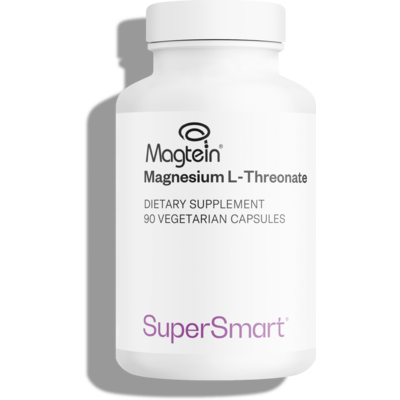
For example, magnesium L-threonate has been studied for its potential ability to cross the blood-brain barrier and increase magnesium levels in certain brain tissues (9).
 Discover Magnesium L-Threonate, a new-generation magnesium threonate dietary supplement.
Other forms, such as magnesium orotate, have been studied to ensure they are properly assimilated by the body.
Discover Magnesium Orotate, a magnesium orotate supplement with maximum bioavailability.
Lastly, some formulas combine several forms of magnesium to offer a comprehensive approach.
Discover OptiMag, a synergistic combination of 8 forms of magnesium with excellent bioavailability and solubility.
Certain plants are also the subject of specific scientific studies as part of migraine research.
For example, white willow naturally contains salicylated derivatives, whose chemical structure belongs to the same family as some compounds used in pharmacology, such as acetylsalicylic acid (better known as aspirin).
These compounds are the subject of scientific research into their interaction with certain biological pathways involved in inflammatory processes (10).
Discover the Willow Bark Extract food supplement, made from white willow bark and standardised to 15% salicyline.
SUPERSMART ADVICE



References
- Gupta J, Gaurkar SS. Migraine: An Underestimated Neurological Condition Affecting Billions. Cureus. 2022 Aug 24;14(8):e28347. doi: 10.7759/cureus.28347. PMID: 36168353; PMCID: PMC9506374.
- Dominguez LJ, Veronese N, Sabico S, Al-Daghri NM, Barbagallo M. Magnesium and Migraine. Nutrients. 2025 Feb 18;17(4):725. doi: 10.3390/nu17040725. PMID: 40005053; PMCID: PMC11858643.
- Yablon LA, Mauskop A. Magnesium in headache. In: Vink R, Nechifor M, editors. Magnesium in the Central Nervous System [Internet]. Adelaide (AU): University of Adelaide Press; 2011. PMID: 29920023.
- Kirkland AE, Sarlo GL, Holton KF. The Role of Magnesium in Neurological Disorders. Nutrients. 2018 Jun 6;10(6):730. doi: 10.3390/nu10060730. PMID: 29882776; PMCID: PMC6024559.
- Maier JAM, Locatelli L, Fedele G, Cazzaniga A, Mazur A. Magnesium and the Brain: A Focus on Neuroinflammation and Neurodegeneration. Int J Mol Sci. 2022 Dec 23;24(1):223. doi: 10.3390/ijms24010223. PMID: 36613667; PMCID: PMC9820677.
- Barbagallo M, Veronese N, Dominguez LJ. Magnesium-An Ion with Multiple Invaluable Actions, Often Insufficiently Supplied: From In Vitro to Clinical Research. Nutrients. 2023 Jul 13;15(14):3135. doi: 10.3390/nu15143135. PMID: 37513553; PMCID: PMC10385004.
- DiNicolantonio JJ, O'Keefe JH, Wilson W. Subclinical magnesium deficiency: a principal driver of cardiovascular disease and a public health crisis. Open Heart. 2018 Jan 13;5(1):e000668. doi: 10.1136/openhrt-2017-000668. Erratum in: Open Heart. 2018 Apr 5;5(1):e000668corr1. doi: 10.1136/openhrt-2017-000668corr1. PMID: 29387426; PMCID: PMC5786912.
- Orlova S, Dikke G, Pickering G, Yaltseva N, Konchits S, Starostin K, Bevz A. Risk factors and comorbidities associated with magnesium deficiency in pregnant women and women with hormone-related conditions: analysis of a large real-world dataset. BMC Pregnancy Childbirth. 2021 Jan 22;21(1):76. doi: 10.1186/s12884-021-03558-2. PMID: 33482760; PMCID: PMC7821493.
- Zhang C, Hu Q, Li S, Dai F, Qian W, Hewlings S, Yan T, Wang Y. A Magtein®, Magnesium L-Threonate, -Based Formula Improves Brain Cognitive Functions in Healthy Chinese Adults. Nutrients. 2022 Dec 8;14(24):5235. doi: 10.3390/nu14245235. PMID: 36558392; PMCID: PMC9786204.
- Antoniadou K, Herz C, Le NPK, Mittermeier-Kleßinger VK, Förster N, Zander M, Ulrichs C, Mewis I, Hofmann T, Dawid C, Lamy E. Identification of Salicylates in Willow Bark (Cortex) for Targeting Peripheral Inflammation. Int J Mol Sci. 2021 Oct 15;22(20):11138. doi: 10.3390/ijms222011138. PMID: 34681798; PMCID: PMC8540557.
Keywords





7 Hours
I have been taking ParActin for several years and can really tell the difference
I have been taking ParActin for several years. I started with a combination of ParActin and Turmeric that I purchased at Costco. When they stopped carrying this, I, of course, stopped taking it. I didn't feel as well and searched out ParActin and paired it together with a turmeric/curcumin supplement. I feel better and it helps aches and pains recover quicker.
Linda
1 Days
Products that work
Products that work
William Hegel
1 Days
Product arrived in a timely fashion and…
Product arrived in a timely fashion and in good condition.
NELSON Jerry
3 Days
Product effectiveness
Quick delivery. Giving product 90 days to see if there are any positive changes. Starting days 31-60
Bob L
7 Days
Easy to order products
Easy to order products
Edward P
10 Days
correct product arrived on time
The product arrived on time and appears to be what I ordered (i do not perform any tests outside of my own experience). I have used this Bacillus Subtills for quite over a year, and I am convinced of it's contribution to my microbiome. The product and business model work well.
Lisa
11 Days
All the supplements are of great…
All the supplements are of great quality and they have almost anything you could need
kirstin Torres
11 Days
Easy to order, fast delivery
Easy to order, fast
Sissy Lawson
15 Days
What luck to come across such a clean…
What luck to come across such a clean brand! No bad ingredients in these and a reasonable price for what we're getting.
Bindi S
16 Days
The best supplement for…
The best supplement for hyperpigmentation or melasma. I have struggled with melasma and hyperpigmentation for 10 years. I have tried everything, including lasers. Nothing really worked except this!
NS
18 Days
Great source for high quality…
Great source for high quality supplements
Vikki L
20 Days
Recommended: "Eye Pressure"
(Eye Pressure pills) Highly recommended for glaucoma patients
LM
22 Days
Great follow-up
Great follow-up
Michael Henderson
26 Days
My hair isn't gray.
My hair isn't gray.
TANQUARY Damon
26 Days
The ease of ordering is not the only …
The ease of ordering is not the only reason why I trust Super Smart Supplements. This company researches everything they sell. Educating Me with a wealth knowledge to make Better Supplement choices. The paractin Andrographis is awesome! I noticed less Knee, shoulder or joint pain. Which proves to me, you're never too old to repair what a lifetime of intense usage has done to your body. I recommend SUPER SMART to anyone who is looking to improve their overall health & maintain an active ,pain free life as You age.
Mchael Montalbano